
Blog
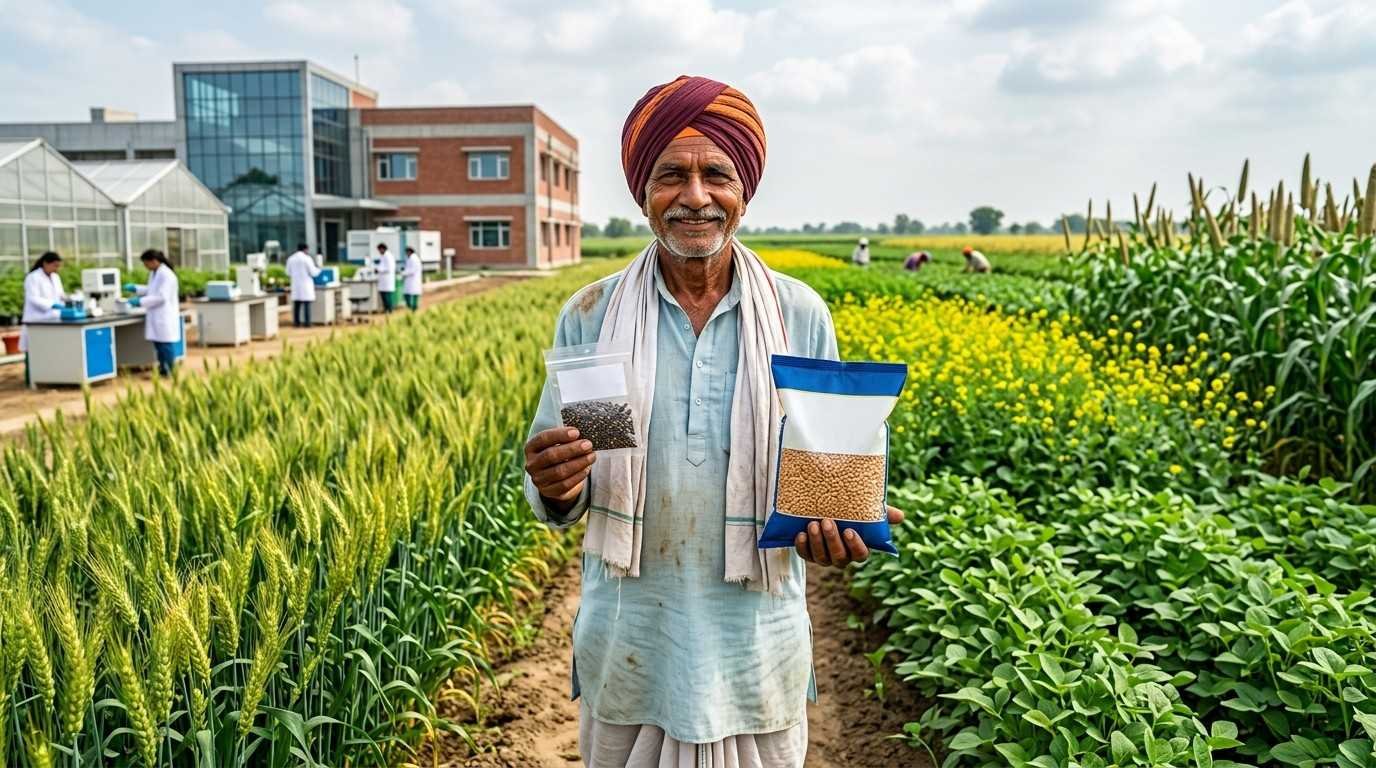
Research Seeds vs Certified Seeds: Everything Farmers Need to Know
Introduction
Choosing the right seed is one of the most important steps for a good harvest. Seeds decide how healthy a plant grows, how much crop a farmer gets, and how well it fights disease. There are two main types of seeds: research seeds and certified seeds. Research seeds are made by scientists to test new ideas and see how plants grow. Certified seeds are checked carefully and approved for real farming. Farmers use certified seeds because they are safe and reliable. Good seeds lead to strong crops and better farm profits. When farmers understand seed types, they can grow healthier crops and earn more money.
If you want to learn more about research seeds, including their meaning, development, and importance in agriculture, read our complete guide on Research Seeds: Meaning, Development & Importance in Modern Agriculture.
What Are Research Seeds?
Definition and Purpose
Research seeds are special seeds made by scientists who study plants. They are not sold in stores like regular seeds. Instead, scientists use them to test new traits in plants. Scientists want to see if these seeds grow better, resist diseases, or give bigger harvests. These seeds are grown at research farms and agricultural colleges. Farmers do not use them for regular farming yet. Only after many years of testing do these seeds become ready for everyone. This helps scientists find the best seeds before selling them to farmers.
How Research Seeds Are Developed
The development of research seeds involves years of scientific breeding. Researchers carefully select parent plants with desirable characteristics such as:
- Higher yield potential
- Better disease resistance
- Improved drought tolerance
- Enhanced grain quality
- Faster maturity
Scientists grow new kinds of plants and watch them very carefully. They check how the plants grow, how strong they are, and how well they survive. Scientists study each new plant before deciding if it can spread widely. Only after all this careful watching do they decide if the plant is good enough to grow in many places. This helps farmers know which plants will work best in their fields.
What Are Certified Seeds?
Definition and Certification Process
Certified seeds are special seeds that are officially checked and approved by experts. Trained seed certification agencies watch over the entire growing process carefully. These seeds come from breeder or foundation seeds of very high quality. During growing, officials inspect the seeds many times to check them. Only seeds that pass all the quality tests get certified.
This careful process makes sure farmers get the best possible seeds.Quality Standards and Testing
Certified seeds are evaluated for several important characteristics, including:
- High genetic purity
- Excellent physical purity
- Minimum weed seed contamination
- High germination percentage
- Moisture standards
- Freedom from major seed-borne diseases
These quality checks ensure that farmers receive reliable planting material with consistent performance.
Research Seeds vs Certified Seeds: Quick Comparison
Research Seeds |
Certified Seeds |
|
Research seeds are special seeds developed for testing and research. |
Certified seeds are produced for commercial farming after meeting quality standards. |
|
Scientists and researchers use them to evaluate new crop varieties. |
Farmers use them for regular cultivation and better crop production. |
|
Their performance is still being studied, so results may vary. |
Their performance is proven and consistent under farming conditions. |
|
They are usually available only through research institutions or field trials. |
They are widely available through certified seed companies and authorized dealers. |
|
Germination standards may vary because they are still experimental. |
They meet strict germination standards before being sold. |
|
Disease resistance and other traits are evaluated during research. |
They are tested for diseases and quality before receiving certification. |
|
Their main purpose is to develop improved seed varieties for the future. |
Their main purpose is to provide reliable, high-quality seeds for farmers. |
|
They are not commonly used for large-scale commercial farming. |
They are recommended for commercial farming because of their proven quality and reliability. |
Key Differences Between Research Seeds and Certified Seeds
Feature |
Research Seeds |
Certified Seeds |
|
Seed Quality |
Still under evaluation, so quality and performance may vary across different farming conditions. |
Produced under strict quality control to ensure consistent and reliable field performance. |
|
Germination Rate |
May show good germination, but results can vary because the seeds are still being tested. |
Must meet prescribed germination standards before being sold to farmers. |
|
Purity Standards |
Mainly developed for research and evaluation, so commercial purity standards may not always apply. |
Maintain high genetic and physical purity through controlled production and certification. |
|
Disease Resistance |
Resistance to pests and diseases is still being evaluated through research and field trials. |
Tested and certified for disease resistance according to official certification standards. |
|
Availability |
Usually available only through research institutions, agricultural universities, or demonstration programs. |
Widely available through licensed seed companies, authorized dealers, and agricultural input suppliers. |
|
Cost |
May be provided free of cost or at subsidized rates for research and field trials. |
Generally more expensive due to quality testing, certification, production, and packaging costs. |
Advantages of Research Seeds
Research seeds offer several valuable benefits for agricultural innovation.
Encourage Innovation
Scientists continuously develop improved crop varieties that can increase future agricultural productivity.
Evaluate New Technologies
Research seeds help identify improved genetics capable of performing under changing climatic conditions.
Improve Crop Characteristics
Scientists use science to help farmers grow better crops for everyone. These special crops give more food from the same amount of land. They also have more vitamins and nutrients to keep people healthy. Some crops are made strong enough to survive bad weather conditions. They can resist diseases, insects, and even long dry seasons. This helps farmers get good harvests even during difficult years. Better crops also mean more food for hungry people around the world. Scientists keep researching to make crops even stronger and healthier every day.
Support Future Farming
Research programs pave the way for more sustainable and productive agriculture.
Advantages of Certified Seeds
Certified seeds provide numerous practical benefits for commercial farmers.
Higher Yield Potential
Healthy, vigorous seeds often establish stronger crop stands and produce better yields.
Reliable Quality
Certification ensures uniform seed quality and dependable field performance.
Better Germination
High germination rates contribute to even crop establishment.
Reduced Risk
Disease-free, high-purity seeds minimize crop failures caused by poor planting material.
Improved Farm Income
Higher productivity often translates into increased profitability and better returns on investment.
When Should Farmers Choose Research Seeds?
Research seeds are suitable when:
- Participating in agricultural research projects
- Conducting demonstration trials
- Testing new crop varieties
- Collaborating with agricultural universities
- Exploring innovative farming practices
Farmers should carefully follow the guidance provided by researchers when using these seeds.
When Should Farmers Choose Certified Seeds?
Certified seeds are the preferred choice for most commercial farming situations.
They are ideal when:
- Growing crops for market production
- Seeking consistent yields
- Reducing cultivation risks
- Investing in long-term farm profitability
- Maintaining crop quality standards
For the majority of farmers, certified seeds provide the most dependable option.
Common Myths About Research and Certified Seeds
Myth 1: Research Seeds Always Produce Higher Yields
Not necessarily. Their performance is still under evaluation and may vary across locations.
Myth 2: Certified Seeds Are Too Expensive
Buying good tools may cost more money at first. But they help people work faster and better. Over time, this extra speed makes up for the higher price.
Myth 3: All Seeds in the Market Are Certified
Many seeds sold locally may not be certified. Farmers should always verify certification labels before purchasing.
Myth 4: Research Seeds Can Replace Certified Seeds
Farmers and scientists use different kinds of seeds for different jobs. Research seeds are special seeds that scientists use for testing new ideas. Scientists plant them to see how well new plant types grow. They check things like size, taste, and resistance to disease. These seeds are not sold to farmers for regular farming yet. Certified seeds are different because they are ready for real farming. These seeds have passed strict quality checks and rules. Farmers buy certified seeds to grow crops for food and sale. They know these seeds will grow strong, healthy plants. So research seeds help scientists learn and improve new seed types. Certified seeds help farmers grow safe and reliable crops.
Best Practices for Selecting the Right Seeds
Farmers should consider several important factors before purchasing seeds.
- Buy seeds from trusted suppliers.
- Check certification labels carefully.
- Review germination information.
- Select varieties suitable for local climate and soil.
- Store seeds properly before sowing.
- Consult agricultural experts for variety recommendations.
- Compare yield potential and disease resistance.
- Avoid purchasing damaged or unlabelled seed packets.
Thoughtful seed selection significantly improves crop performance and farm productivity.
Frequently Asked Questions
Are certified seeds better than research seeds?
Certified seeds are reliable because experts test them many times. They check for purity, disease, and healthy sprouting. This helps farmers grow strong crops every season.
Can farmers buy research seeds?
In some cases, yes. Research institutions may distribute them through demonstration programs or field trials.
Why are certified seeds more reliable?
Certified seeds are more reliable because experts test them many times. They check the seeds are pure and healthy. This helps them grow strong crops every time.
Do research seeds become certified seeds?
Yes, research seeds can become certified seeds later. First, scientists test them for many years. If they pass all tests, they get approved and certified.
Conclusion
Seeds are very important for farming and growing food. There are two main types: research seeds and certified seeds. Research seeds help scientists create better crop varieties for farmers. These new varieties can grow more food than before. They also help plants resist diseases and harsh weather. Certified seeds are carefully checked to make sure they are good. Farmers trust certified seeds because they grow well every time.
Certified seeds help plants start strong and grow evenly. They also produce good harvests that farmers can depend on. Most farmers choose certified seeds for their regular yearly crops. Research seeds are mainly used for testing brand new ideas. Scientists use them in special trials and shared programs.
Picking the right seed is a smart choice for every farmer. It helps them grow healthy crops and succeed for years.
Looking for high-quality certified seeds? Explore AgriRaise Crop Care's premium seed collection and choose the right seeds for better crop productivity. Contact us today to learn more.

Leave a comment


Comments(0)