
Blog
Berseem Sowing Time in India: Best Season & Month
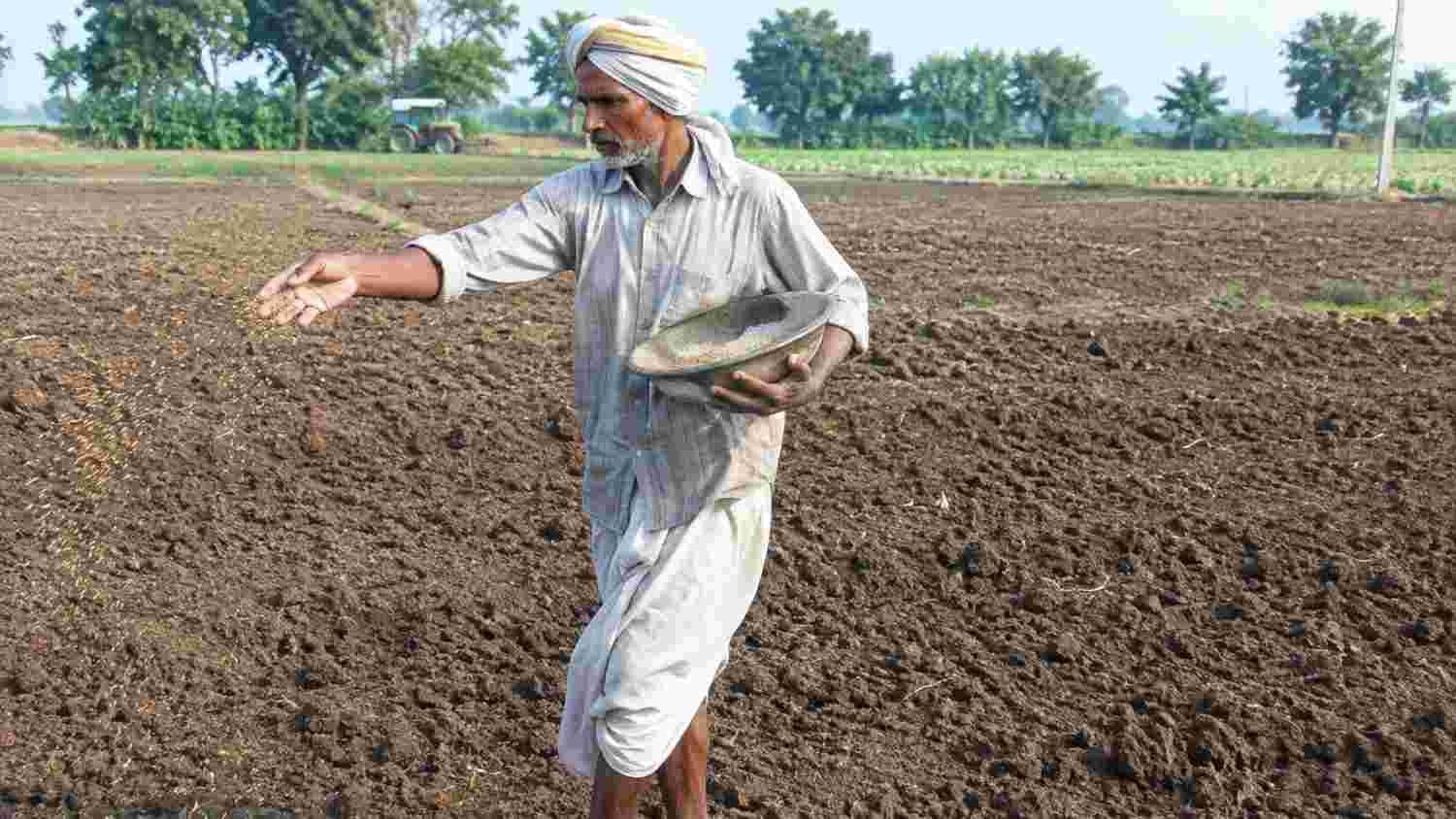
Berseem sowing time in India is October to mid-November for most states, when day temperatures fall to 20–25°C. In North India, farmers can start from mid-September in cooler pockets. Sowing in this rabi window gives faster germination, more green fodder cuttings and better yield. Late sowing after November reduces total harvests.
Introduction
Berseem sowing time decides how many green fodder cuttings you will get this winter. Sow too early, and heat kills the seedlings. Sow too late, and you lose two or three valuable cuts.
Many dairy farmers learn this the hard way. A farmer sows in the first week of September, the soil is still hot, and half the seed never comes up. The reseeding costs both money and time.
This guide fixes that problem. You will learn the best month, state-wise dates, temperature needs and the real difference between early and late sowing. It is written by the team at Agri Raise Crop Care, so you can plan with confidence.
Table of Contents
- What Is Berseem and Why Does Sowing Time Matter?
- Berseem Sowing Season in India: The Rabi Window
- Best Month for Berseem Sowing in India
- State-Wise Berseem Planting Time
- Temperature and Climate Needs
- Early vs Late Berseem Sowing
- Step-by-Step Guide: When to Sow Berseem and How
- Common Mistakes to Avoid
- Benefits of Sowing Berseem at the Right Time
- Choosing the Right Berseem Seed
- FAQs
- Conclusion
What Is Berseem and Why Does Sowing Time Matter?
Berseem (Trifolium alexandrinum) is the "king of fodder crops" in India. It is a winter legume grown mainly for cattle, buffalo, goats and sheep.
It gives soft, juicy and protein-rich green fodder. It also adds nitrogen to the soil, which helps the next crop.
Why the right planting time changes everything
Berseem is a cool-season crop. It loves mild days and cool nights.
The right planting time gives you:
- Strong and uniform germination
- Five to seven fodder cuttings in one season
- Higher crude protein in the leaves
- Less weed and disease pressure
Wrong timing reduces all of these. That is why knowing when to sow berseem is the first step to profit.
Berseem Sowing Season in India: The Rabi Window
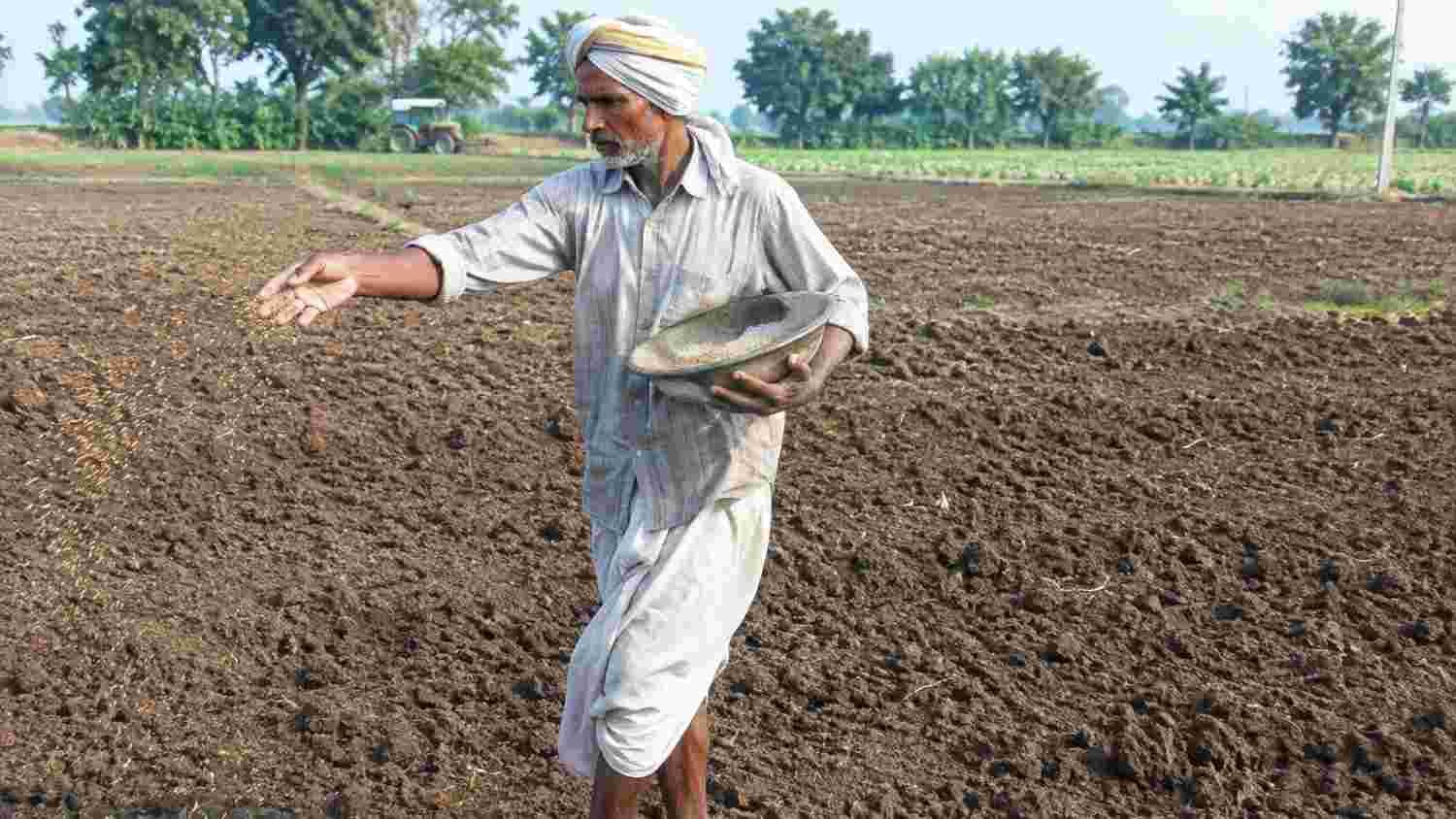
Berseem is a rabi crop. It is sown after the monsoon ends and grown through winter.
The berseem sowing season runs from mid-September in the cooler north to late November in warmer regions. The crop continues to give cuttings until March or April.
Barley is another important rabi crop. See our complete guide to barley seeds for farming in India.
Why rabi suits berseem
Winter brings cool nights and gentle sunshine. These are the exact conditions required for leafy growth.
Soil moisture is also good after the monsoon. Farmers can sow with fewer irrigations at the start.
Best Month for Berseem Sowing in India
For most of India, October is the best month for berseem sowing. The first fortnight of October is ideal in many regions.
By then, day temperatures settle between 25°C and 30°C. Night temperatures drop to a comfortable level. Seeds germinate in four to six days.
Quick sowing calendar
- Mid-September to end September: Possible in cool hill and northern pockets
- October (best): Ideal for the Indo-Gangetic plains and central India
- November (first half): Good for warm states and paddy-fallow fields
- After 20 November: Late sowing, with lower fodder yield
If your field was under paddy, wait for harvest. Then sow berseem by mid-November. This still gives a good crop.
What about today's date?
Today is 12 November. You are still within the safe window in most states. Sow now rather than waiting for December.
State-Wise Berseem Planting Time
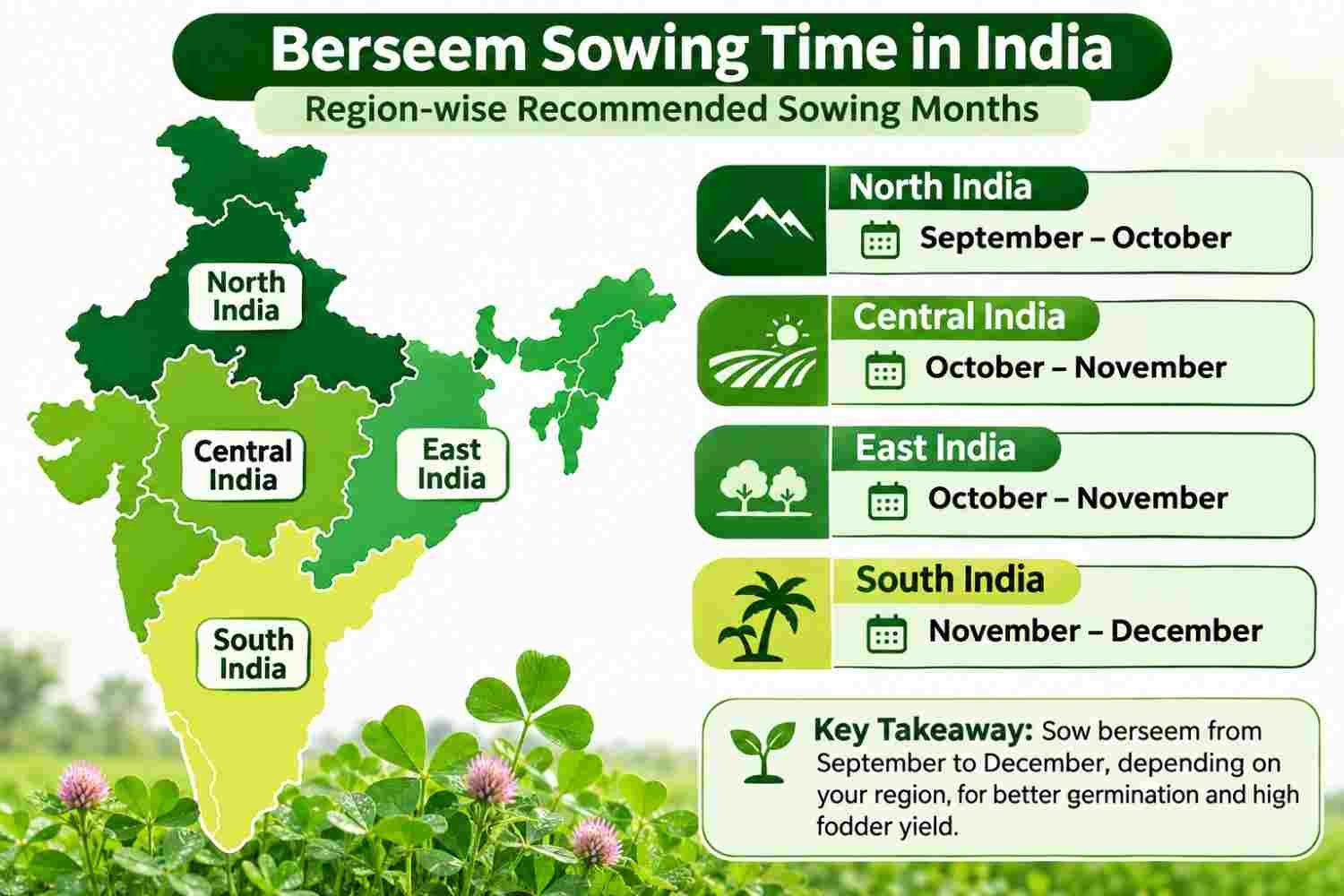
India has many climates. So the berseem planting time changes by state. Always check your local weather before sowing.
|
Region / State |
Best Sowing Time |
Notes |
|
Punjab, Haryana |
Mid-Sept to end-Oct |
Sow early for 6–7 cuttings |
|
Uttar Pradesh |
October to mid-Nov |
Peak window is first half of October |
|
Rajasthan |
October to mid-Nov |
Irrigate lightly after sowing |
|
Gujarat |
October to November |
Avoid very hot, dry days |
|
Madhya Pradesh |
October to mid-Nov |
Works well after kharif harvest |
|
Bihar, Jharkhand |
Late Oct to mid-Nov |
Sow after the paddy harvest |
|
Odisha, West Bengal |
November |
Soil must drain well |
|
Maharashtra, Karnataka |
October to November |
Cooler highlands can sow earlier |
|
Tamil Nadu, Andhra Pradesh |
October to December |
Needs cooler spells |
These are typical windows. Local conditions in your district may shift them by one to two weeks.
Berseem sowing time in North India
North India has the longest winter. Farmers here can sow from mid-September in cooler areas.
Punjab and Haryana farmers often get the most cuttings. The long cool season supports this.
Berseem sowing time in Central and East India
Central India sows mainly in October. Eastern states like Bihar and Odisha sow a little later.
This is because paddy stays in the field until late October. Berseem follows right after.
Berseem sowing time in South India
South India has a milder winter. So the crop needs careful timing.
Sow when temperatures dip below 30°C. Hill areas such as the Nilgiris suit berseem well.
Temperature and Climate Needs
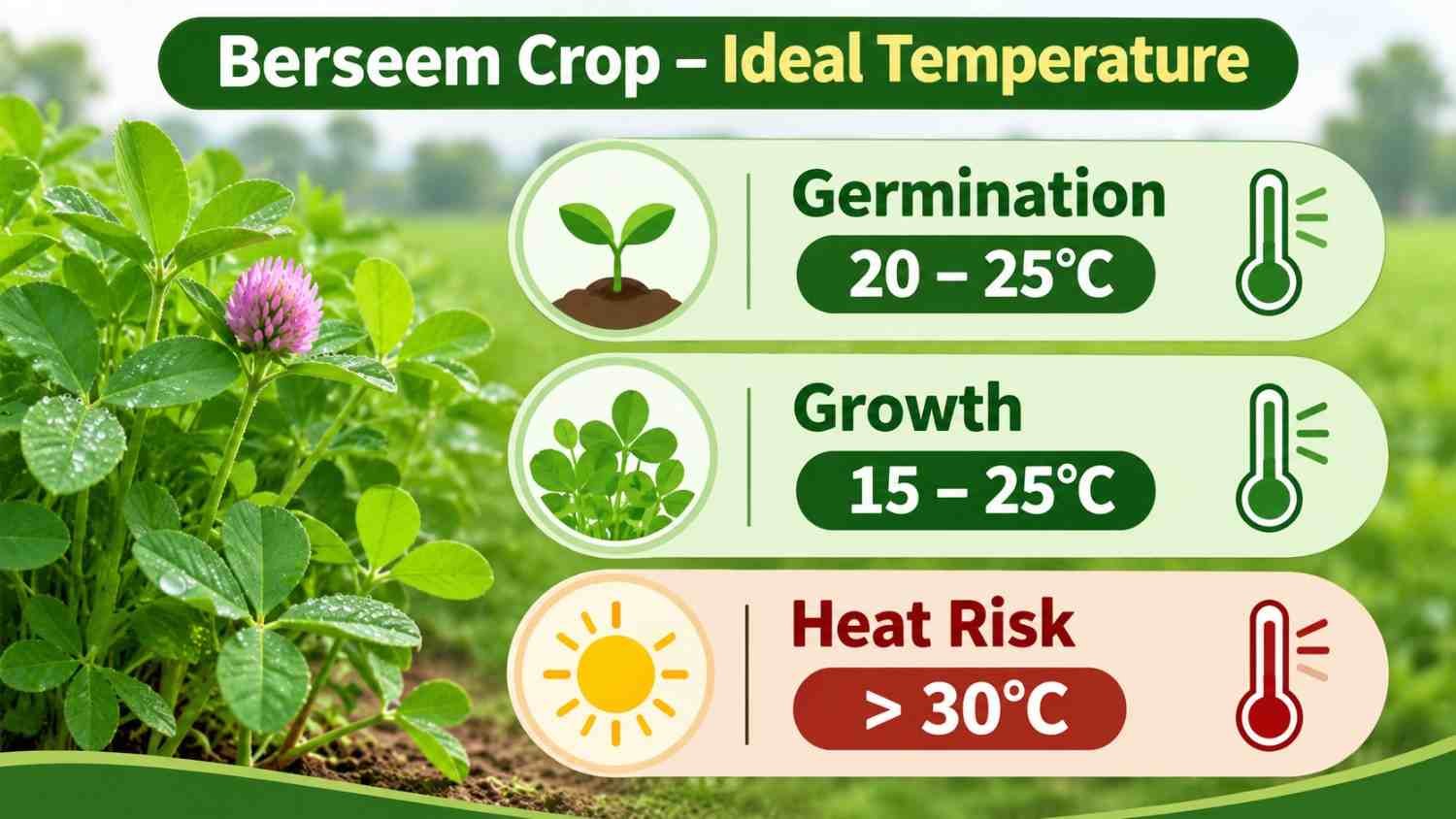
Temperature is the biggest factor in berseem sowing time. Get this right, and everything else is easier.
Ideal temperature range
- Germination: 20°C to 25°C is the sweet spot
- Active growth: 15°C to 25°C
- Too hot: Above 30°C hurts germination
- Too cold: Heavy frost slows growth and damages young shoots
Climate and soil
Berseem grows best in well-drained loam or clay-loam soil. A soil pH of 6.5 to 7.5 is ideal.
It dislikes waterlogging and very saline soil. Good field leveling helps a lot. For weather updates, check the India Meteorological Department before you plan sowing.
Early vs Late Berseem Sowing
Many farmers ask whether early or late sowing is better. The answer depends on temperature.
Early sowing (September)
Benefits: More days of growth, so more cuttings and higher total green fodder.
Risks: Hot soil lowers germination. Seedlings may dry out or burn. Pest attack can be higher.
Early sowing works only when nights are cool and moisture is steady.
Ideal sowing (October to mid-November)
This window gives the best balance. Seeds sprout evenly and plants grow fast.
You can expect five to seven cuttings under good management. The first cut usually comes in 45 to 55 days.
Late sowing (after 20 November)
Drawbacks: Cold slows seedling growth. You get fewer cuttings, often three or four. Fodder yield per acre is lower.
Late sowing is still useful when paddy or cotton blocks the field. Use a higher seed rate and keep the field moist.
Real-life example
A dairy farmer in Uttar Pradesh sowed berseem on 5 October. He took his first cut in late November.
His neighbour sowed on 1 December. That field gave its first cut only in late January, with fewer cuts overall. The difference was clear in milk output too.
Step-by-Step Guide: When to Sow Berseem and How
Step 1: Prepare the field. Plough two or three times and level it well. Add farmyard manure if available.
Step 2: Choose certified seed. Poor seed often carries weed seeds like chicory (kasni). Good seed saves you from weeding trouble later.
Step 3: Treat the seed. Mix the seed with Rhizobium culture before sowing. This helps the plant fix nitrogen. Sow it the same day.
Step 4: Sow at the right rate. A common seed rate is about 20–25 kg per hectare. Late sowing may need a little more. Follow the label or your local agriculture officer's advice.
Step 5: Sow the seed. Broadcast evenly over a levelled, moist field. Cover the seed lightly. Do not bury it deep.
Step 6: Irrigate and manage. Give the first irrigation soon after sowing. Then water every 10–15 days, depending on the soil. Apply phosphorus at sowing.
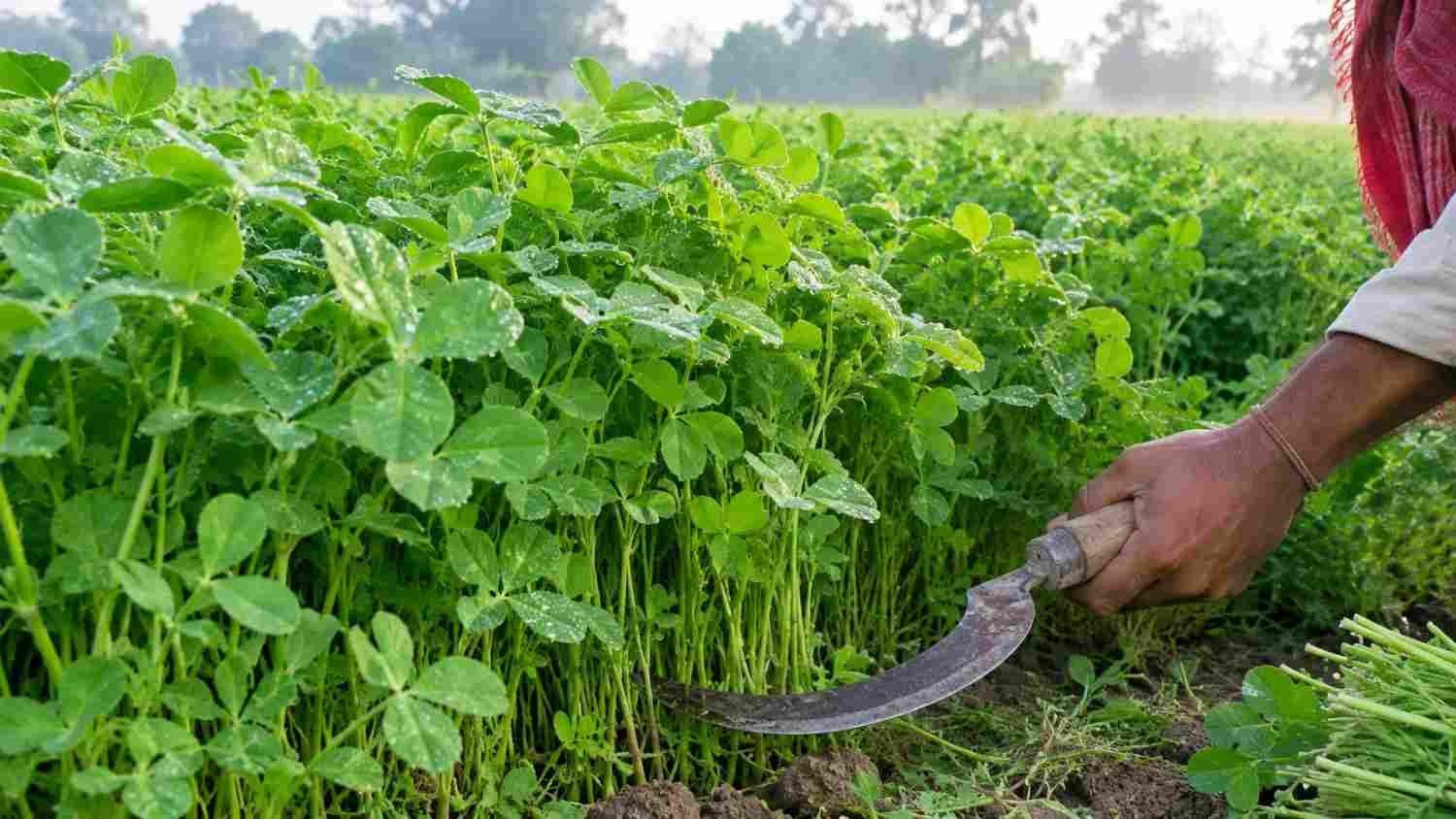
Step 7: Harvest on time. Take the first cutting at 45–55 days. Cut again every 25–30 days. Leave about 5 cm of stubble so the plant regrows fast.
Common Mistakes to Avoid
- Sowing in September heat without checking temperature
- Using uncertified seed full of weed seeds
- Skipping Rhizobium seed treatment
- Over-irrigating in heavy soil
- Burying the seed too deep
- Delaying the first irrigation
Benefits of Sowing Berseem at the Right Time
- Better milk yield: Protein-rich green fodder supports healthy animals
- Lower feed cost: More cuttings mean less purchased feed
- Healthier soil: Berseem adds nitrogen for the next crop
- Steady income: Surplus fodder can be sold or made into hay
Choosing the Right Berseem Seed
Timing matters, but seed quality matters equally. Weak seed wastes the best sowing window.
Look for seeds with high germination, high purity and no weed contamination. Agri Raise Crop Care supplies quality seeds tested for these traits. Explore our berseem seeds for fodder farming for your next sowing.
FAQs
What is the best berseem sowing time in India?
The best berseem sowing time in India is October to mid-November. This is the main rabi window. Temperatures are cool and germination is strong.
When to sow berseem in North India?
In North India, sow berseem from mid-September to end-October. Cooler areas can start earlier. October remains the safest month for most fields.
Can I sow berseem in December?
Yes, but yield will be lower. December sowing gives fewer cuttings because of cold weather. Use a slightly higher seed rate and keep the soil moist.
What temperature is best for berseem planting time?
Berseem germinates best at 20–25°C. Growth is good between 15°C and 25°C. Temperatures above 30°C can reduce germination.
How many days does berseem take for the first cut?
The first cutting is usually ready in 45–55 days after sowing. Later cuttings come every 25–30 days.
Is it a rabi or kharif crop?
Berseem is a rabi crop. The berseem sowing season starts after the monsoon and ends around late November. It grows through the cool winter months.
Conclusion
Berseem sowing time is simple to remember: October to mid-November for most of India. Check your state, watch the temperature, and sow on time.
Pair good timing with certified seed and proper care. You will see more cuttings, healthier animals and better returns. Ready to sow? Talk to Agri Raise Crop Care for quality berseem seed and expert guidance.

Leave a comment


Comments(0)