
Blog
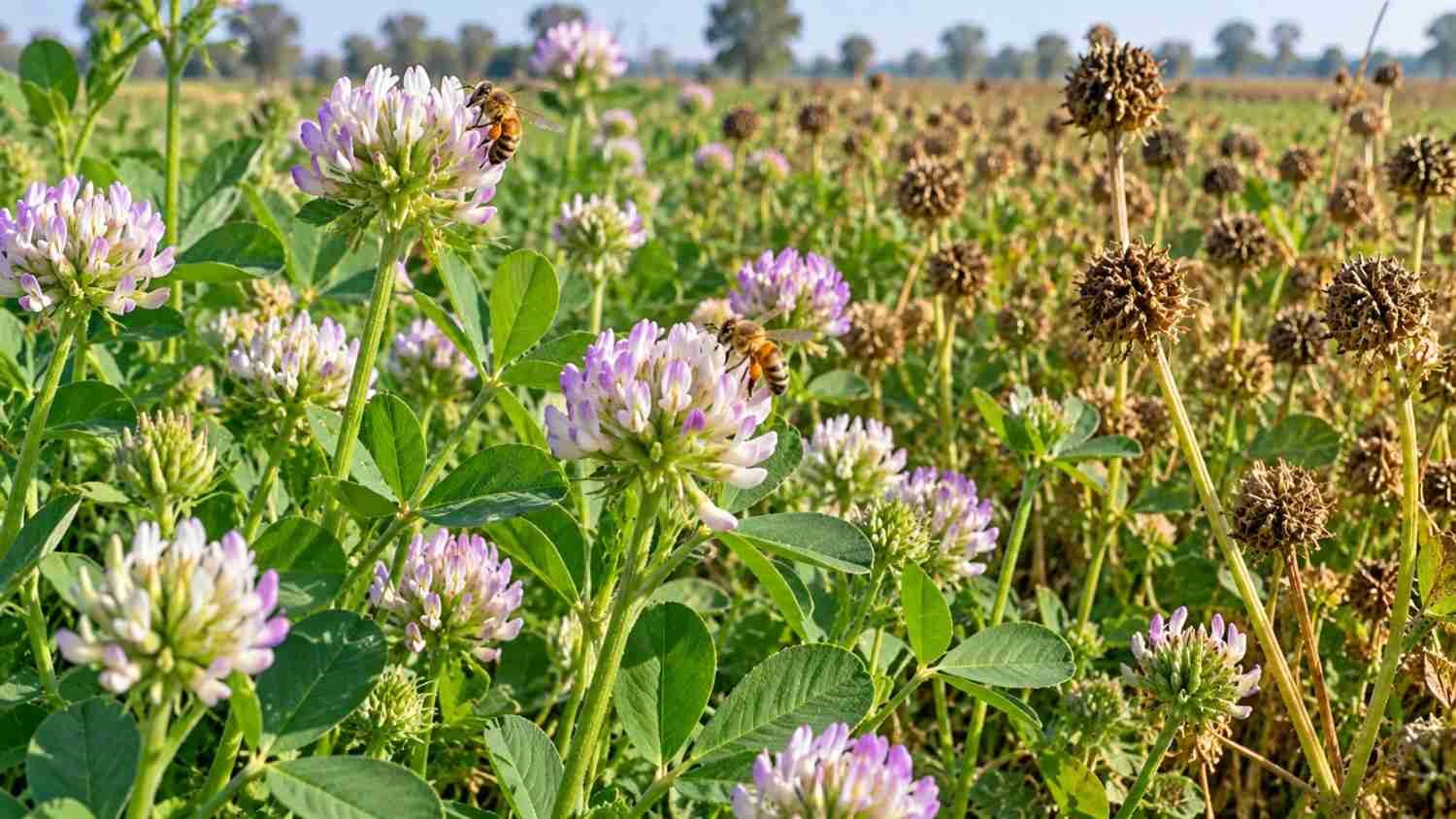
Berseem Yield Per Acre: Fodder & Cutting Guide
Berseem yield per acre is about 32 to 40 tonnes of green fodder in a full season with 5 to 6 cuttings under good management. Seed yield is much lower, around 1 to 2 quintals per acre. Yield depends on variety, sowing time, irrigation, and weed control.
Introduction
Berseem yield per acre decides how much green milk you can produce from your own land. A good berseem field feeds your animals for five to six months. A poor one leaves you buying costly feed.
Many farmers sow berseem on time but still get low cuttings. The reasons are usually simple. Wrong variety, late sowing, weeds, and missed irrigation are the common ones.
In this guide, we explain average yield, cutting schedule, crop duration, and weed control. We also cover seed yield for farmers who want to save seed. Everything is in simple steps you can use this season.
Table of Contents
- What Is a Good Berseem Yield Per Acre?
- Berseem Seeds Duration: From Sowing to Last Cut
- Berseem Cutting Schedule for Higher Fodder Yield
- Factors That Decide Berseem Yield
- Berseem Weed Management: Protect Your Yield
- Berseem Seeds and Weeds: Why Clean Seed Matters
- Berseem Seed Yield Per Acre
- Step-by-Step Plan to Raise Berseem Yield
- Benefits and Uses of Berseem Fodder
- Frequently Asked Questions
What Is a Good Berseem Yield Per Acre?
Berseem is the "king of fodder" in the Rabi season. It gives many cuttings from one sowing. Total yield adds up across all cuts.
A well-managed field gives about 32 to 40 tonnes of green fodder per acre. This is roughly 80 to 100 tonnes per hectare. Average farms often get 20 to 30 tonnes per acre.
Berseem Yield Per Acre by Management Level
|
Management Level |
Cuttings |
Green Fodder (tonnes/acre) |
|
Poor (late sowing, weeds, few irrigations) |
3–4 |
15–20 |
|
Average farmer practice |
4–5 |
20–30 |
|
Good (right variety, timely cuts, weed control) |
5–6 |
32–40 |
These are approximate ranges. Actual berseem yield changes with region, soil, and weather.
Real-Life Example
Think of a dairy farmer with two acres. At average practice, he gets about 50 tonnes in a season. With clean seed, timely irrigation, and weed control, he can reach 65 to 70 tonnes.
That extra 15 to 20 tonnes feeds several animals for weeks. It costs far less than buying fodder or concentrate.
Berseem Seeds Duration: From Sowing to Last Cut
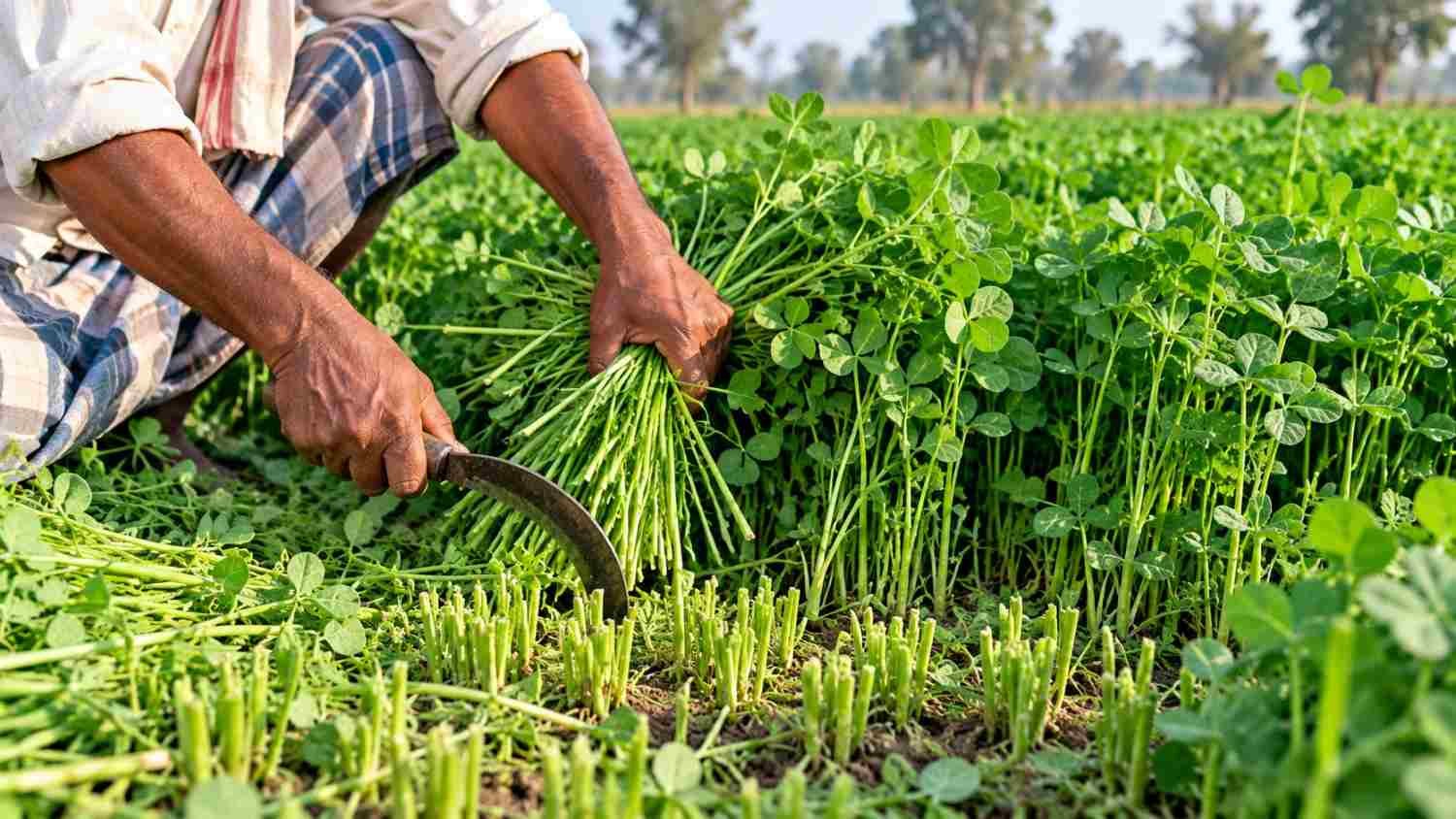
Farmers often ask about berseem seeds duration. This means how long the crop takes from sowing to cutting. Here is the usual timeline in North India.
- Sowing time: Mid-October to mid-November
- Germination: 5 to 7 days after sowing
- First cut: 50 to 55 days after sowing
- Later cuts: Every 25 to 30 days in winter
- Spring cuts: Every 20 to 25 days as growth speeds up
- Fodder crop ends: March to April
Berseem is a long-duration fodder crop. It stays in the field for five to six months. If you want seed, the crop stays until May.
Sowing Window Matters
Sowing in the last week of October gives the best results. Late sowing in December cuts the number of cuttings. Fewer cuttings mean lower total yield.
References and Recommended Agricultural Resources
For reliable information on crop varieties, fodder production, and scientific farming practices, readers can refer to the following trusted agricultural resources:
- Indian Council of Agricultural Research (ICAR): Refer to ICAR and its relevant research institutes for scientific crop recommendations, improved varieties, and agricultural research relevant to Indian farming conditions.
- Food and Agriculture Organization (FAO): Explore FAO resources for information on forage crops, fodder production, and sustainable agricultural practices.
These resources can help farmers and readers understand crop selection and fodder management. Always verify variety suitability and cultivation recommendations with local agricultural experts before sowing.
Berseem Cutting Schedule for Higher Fodder Yield
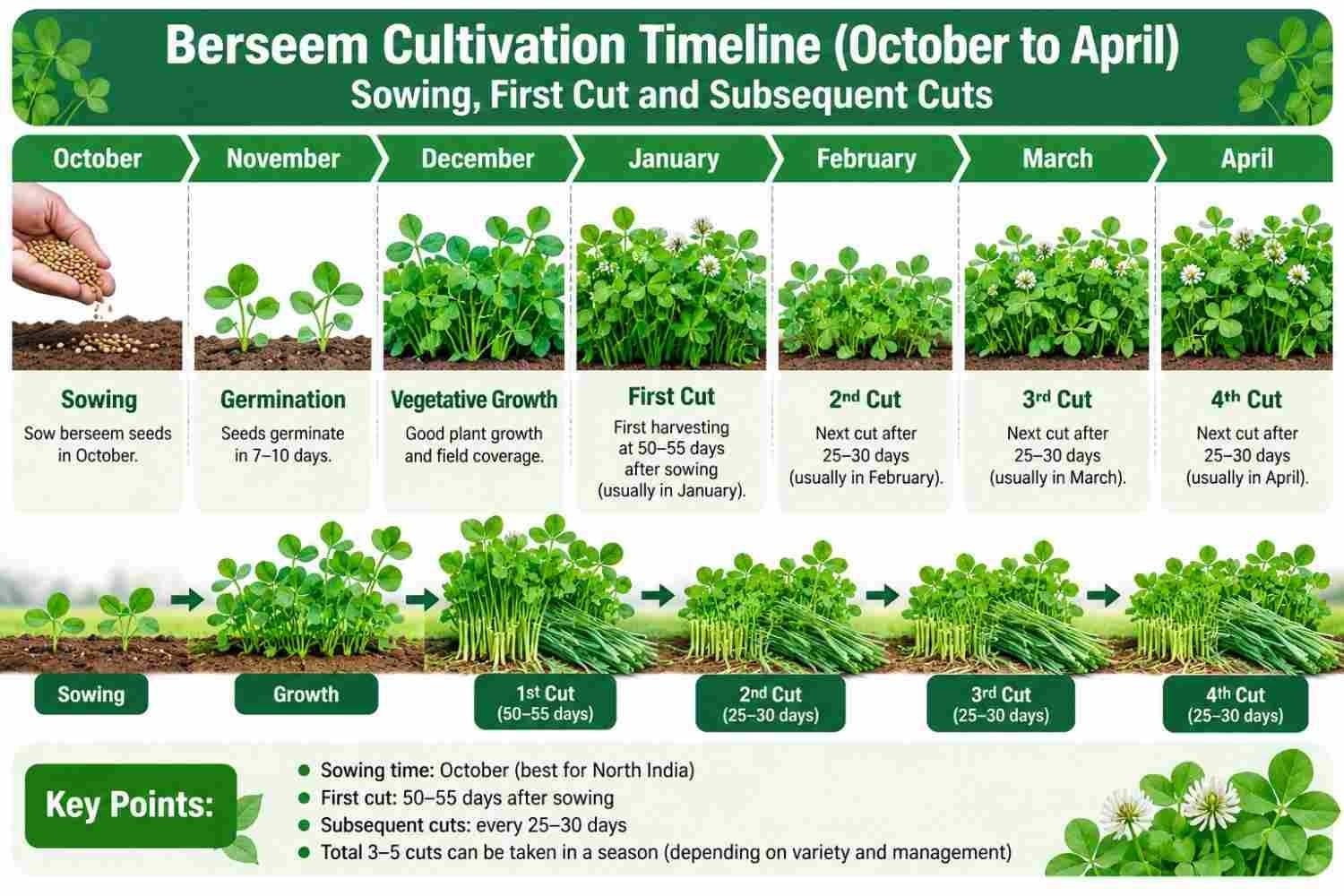
Cutting at the right time protects both yield and quality. Cut too early and you lose weight. Cut too late and stems turn tough.
Step-by-Step Cutting Guide
- First cut at 50–55 days. The crop is about 30–40 cm tall.
- Cut 5–7 cm above ground. This keeps growing points alive for fast regrowth.
- Irrigate right after each cut. Water helps quick regrowth.
- Repeat every 25–30 days. Shorten the gap to 20–25 days in spring.
- Stop at 5–6 cuts. Decide early if you want to keep the last stage for seed.
Typical Cutting Calendar
|
Cut |
Approx. Timing |
Notes |
|
1st |
Dec |
Often the highest quality, tender fodder |
|
2nd |
Jan |
Growth slows in cold weather |
|
3rd |
Feb |
Good recovery after weather warms |
|
4th |
Mar |
Heavy cut in good fields |
|
5th–6th |
Mar–Apr |
Quick regrowth; watch for hard stems |
Practical Tip
Mix berseem with dry fodder like wheat straw. Fresh berseem is very rich and can cause bloat if fed alone in large amounts. Wilt it for a few hours before feeding.
Factors That Decide Berseem Yield
Several factors work together. Fix the weakest one first.
1. Variety Choice
A good variety gives more cuts and better regrowth. Popular varieties include Wardan, Mescavi, BL-10, JB-1, and Pusa Giant. Choose one that suits your region and cold tolerance.
Read our guide to the best berseem seed varieties in India before you buy.
2. Seed Quality and Seed Rate
Use certified, clean, and purity-tested seed. The usual seed rate is 8 to 10 kg per acre. Low seed rate gives thin stands and more weeds.
Quality seed from a trusted brand like Agri Raise Crop Care berseem seeds reduces the risk of weed seeds and poor germination.
3. Soil and Land Preparation
Berseem likes well-drained loamy to clay loam soil. Level the field well. Poor drainage and waterlogging damage young plants.
4. Nutrition
Add well-rotted farmyard manure before sowing. A small starter dose of phosphorus helps early growth. Treat seed with Rhizobium culture so the crop fixes its own nitrogen.
Always follow the dose advised by your soil test and local Krishi Vigyan Kendra (KVK).
5. Irrigation
Give the first irrigation within a week of sowing. Then irrigate every 10 to 15 days in winter. In spring, shorten the gap to 7 to 10 days. Irrigate after every cutting.
6. Weed Control
Weeds steal light, water, and nutrients. They also lower fodder quality. We explain this next.
Berseem Weed Management: Protect Your Yield
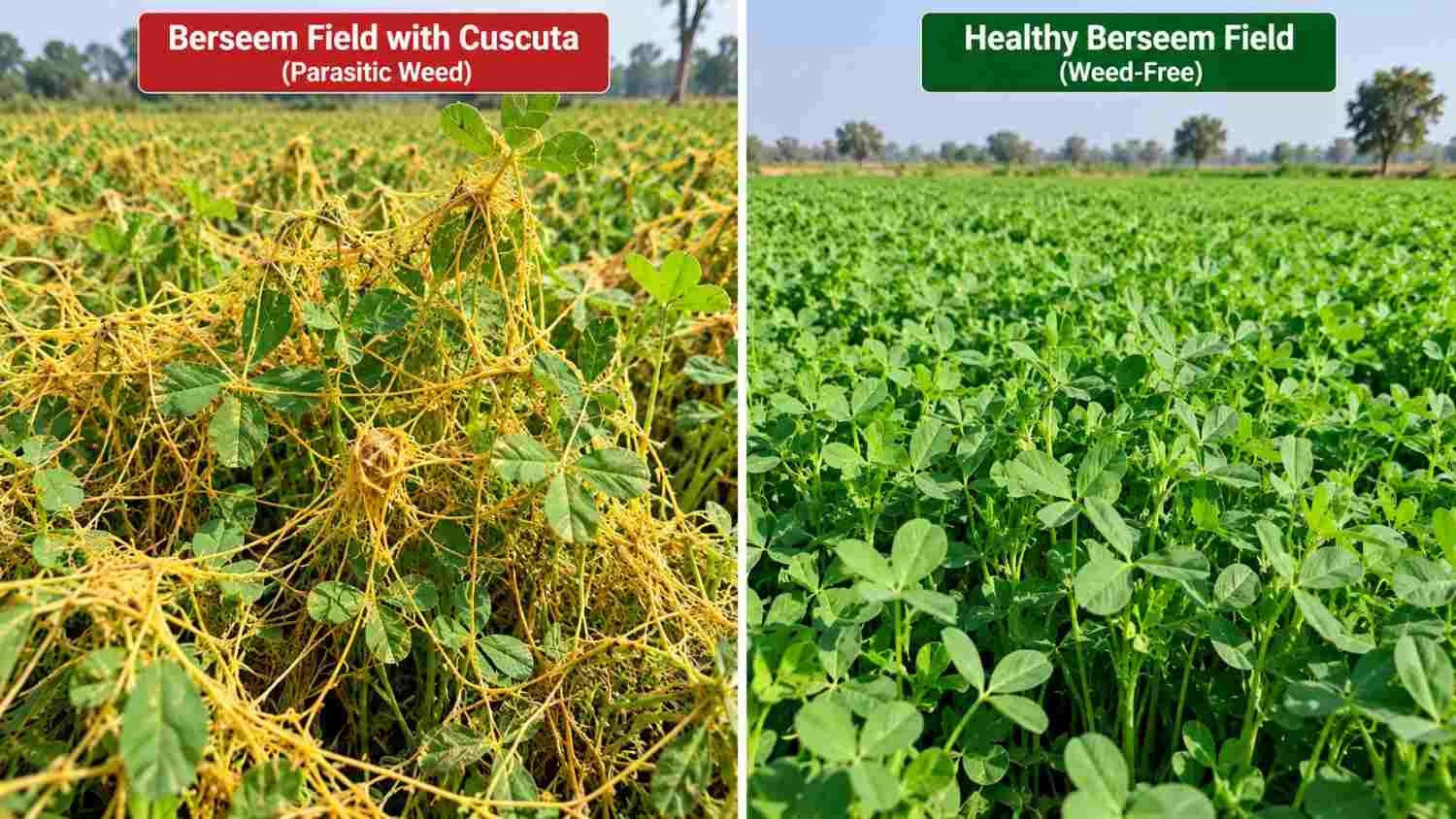
Berseem weed management is one of the biggest yield protectors. Weeds are heaviest in the first 30 to 40 days. This is when berseem grows slowly.
Common Weeds in Berseem
- Cuscuta (dodder): A parasitic plant that wraps around berseem and drains it
- Chicory (kasni): A common weed in northern India that looks like berseem early on
- Other winter weeds: Broadleaf and grass weeds that grow with the crop
Weed Management Methods
- Use clean seed. This is the first and cheapest step. Most Cuscuta spreads through contaminated seed.
- Prepare a fine, weed-free seedbed. Deep ploughing and leveling help. Irrigate before sowing and let weeds germinate. Then till again to destroy them.
- Use pre-emergence herbicide if needed. Products like pendimethalin are used in berseem. Use the label dose and spray within a day or two of sowing. Ask your local KVK or agriculture officer for the exact dose for your area.
- Do timely hand weeding. Remove weeds once or twice in the early stage. This is practical for small fields.
- Use the first cutting wisely. Cutting the crop early helps limit many annual weeds before they set seed.
Special Care for Cuscuta
If you spot Cuscuta, act fast. Cut and remove the affected patch along with some healthy plants. Burn or bury it away from the field. Do not feed infested fodder to animals, since weed seeds can pass through and spread.
Important: Always read and follow herbicide label instructions. Wear protective gear. Do not spray before checking weather and soil moisture.
Berseem Seeds and Weeds: Why Clean Seed Matters
Berseem seeds and weeds are closely linked. Berseem seed is tiny. Cuscuta and chicory seed look very similar in size and shape. Low-quality seed can carry them into your field.
Here is how to cut the risk:
- Buy certified seed with a purity and germination report
- Avoid loose, unbranded seed from unknown sources
- Check the seed lot by eye for dark, rough, or odd-shaped seeds
- Ask your seed dealer about weed seed content
Some farmers soak seeds in a salt water (brine) solution. Light weed seeds and Cuscuta can be separated this way. Rinse and dry the seed before sowing. Treat this as a backup, not a replacement for clean seed.
A few extra rupees spent on good seed can save weeks of work later. It also protects your milk yield.
Berseem Seed Yield Per Acre
Some farmers grow berseem to produce seed. Berseem seed yield is much lower than fodder yield. The crop also needs more careful handling.
Expected Berseem Seed Yield
- Average seed yield: About 1 to 2 quintals per acre
- Better managed crops: Can go somewhat higher
- Fodder cuts before seed: Usually 2 to 3 cuts, then leave the crop for seed
Tips for Better Seed Yield
- Stop cutting by February. Late cutting delays flowering.
- Irrigate at flowering. Moisture stress cuts seed set.
- Encourage pollination. Honeybees improve seed set a lot. Keep hives nearby or avoid spraying during flowering.
- Harvest at the right time. Harvest when most flower heads turn brown, around May.
- Dry and clean well. Store seed at low moisture to keep germination high.
If you grow seed for sale, remember that seed purity rules apply. Keep fields free of Cuscuta and chicory, or the lot may be rejected.
Step-by-Step Plan to Raise Berseem Yield
Use this simple plan for the coming season.
- Pick the right variety for your region and soil.
- Buy certified, clean seed at 8–10 kg per acre.
- Treat seed with Rhizobium culture before sowing.
- Sow in mid-October to early November on a leveled, well-prepared field.
- Irrigate within a week, then every 10–15 days.
- Control weeds early, in the first 30–40 days.
- Take the first cut at 50–55 days, 5–7 cm above ground.
- Irrigate after every cut and repeat cuts every 25–30 days.
- Decide by February whether to keep the field for seed.
- Keep records of cuts and weights to improve next year.
Benefits and Uses of Berseem Fodder
Berseem is valued for both animals and soil.
- High protein: Good for milk production in cows and buffaloes
- Palatable and digestible: Animals eat it readily
- Soil improvement: As a legume, it adds nitrogen to the soil
- Good for rotation: Helps the next crop, such as maize or paddy
- Multiple cuttings: Steady green fodder through winter and spring
- Hay and silage: Extra berseem can be dried or mixed with other crops for later use
Berseem fits well in dairy farms, goat and sheep rearing, and mixed farms.
Frequently Asked Questions
1. Which crop is best for high-yield fodder?
Berseem is one of the preferred winter fodder crops in North India because it provides nutritious green fodder and supports multiple harvests under suitable growing conditions. Farmers should select a suitable berseem seed variety based on their region, soil, irrigation availability, and livestock requirements. Agri Raise Crop Care Pvt. Ltd. offers WINTER GOLD – Hadu Berseem Grass Seed for farmers exploring berseem seed options.
2. Why is berseem called the king of fodder?
Berseem is often called the king of fodder because it produces palatable, protein-rich green forage that is valuable for dairy cattle. It can also provide multiple cuts during the winter growing season when managed properly.
3. How much time does berseem take to grow?
Berseem generally takes around 50–55 days after sowing for its first cut under suitable growing conditions. Subsequent cuts may be taken at intervals of approximately 25–30 days, depending on weather, soil fertility, irrigation, and crop growth.
Farmers considering WINTER GOLD – Hadu Berseem Grass Seed by Agri Raise should follow the cultivation and harvesting guidance applicable to the product and their local farming conditions.
4. What is the fastest-growing fodder crop?
The growth rate depends on the season, climate, and farming practices. Berseem and fodder oats are popular winter fodder options in suitable regions. Farmers should compare sowing time, first-harvest duration, and total seasonal fodder production before choosing a crop.
5. Which fodder has the highest protein?
Berseem and lucerne (alfalfa) are both known as protein-rich forage crops. Their protein content varies with the variety, maturity stage, soil conditions, and harvesting time. For dairy farmers, choosing suitable seed and harvesting at the recommended stage can help maintain fodder quality.
Farmers looking for berseem seed options can explore WINTER GOLD – Hadu Berseem Grass Seed from Agri Raise Crop Care Pvt. Ltd. and confirm its suitability for their region before sowing.
Conclusion
Berseem yield per acre rises when basics are right. Choose a good variety, sow on time, and use clean seed. Irrigate after every cut and control weeds early.
Berseem fits well in a wider fodder and crop plan. For more on crop choices, read our pillar guide on Barley Seeds for Farming in India: Complete Guide (2026). Then explore the best berseem seed varieties in India and pick the right seed for your field.
Ready to sow? Explore quality berseem seeds from Agri Raise Crop Care for better germination and cleaner fields.

Leave a comment


Comments(0)