
Blog
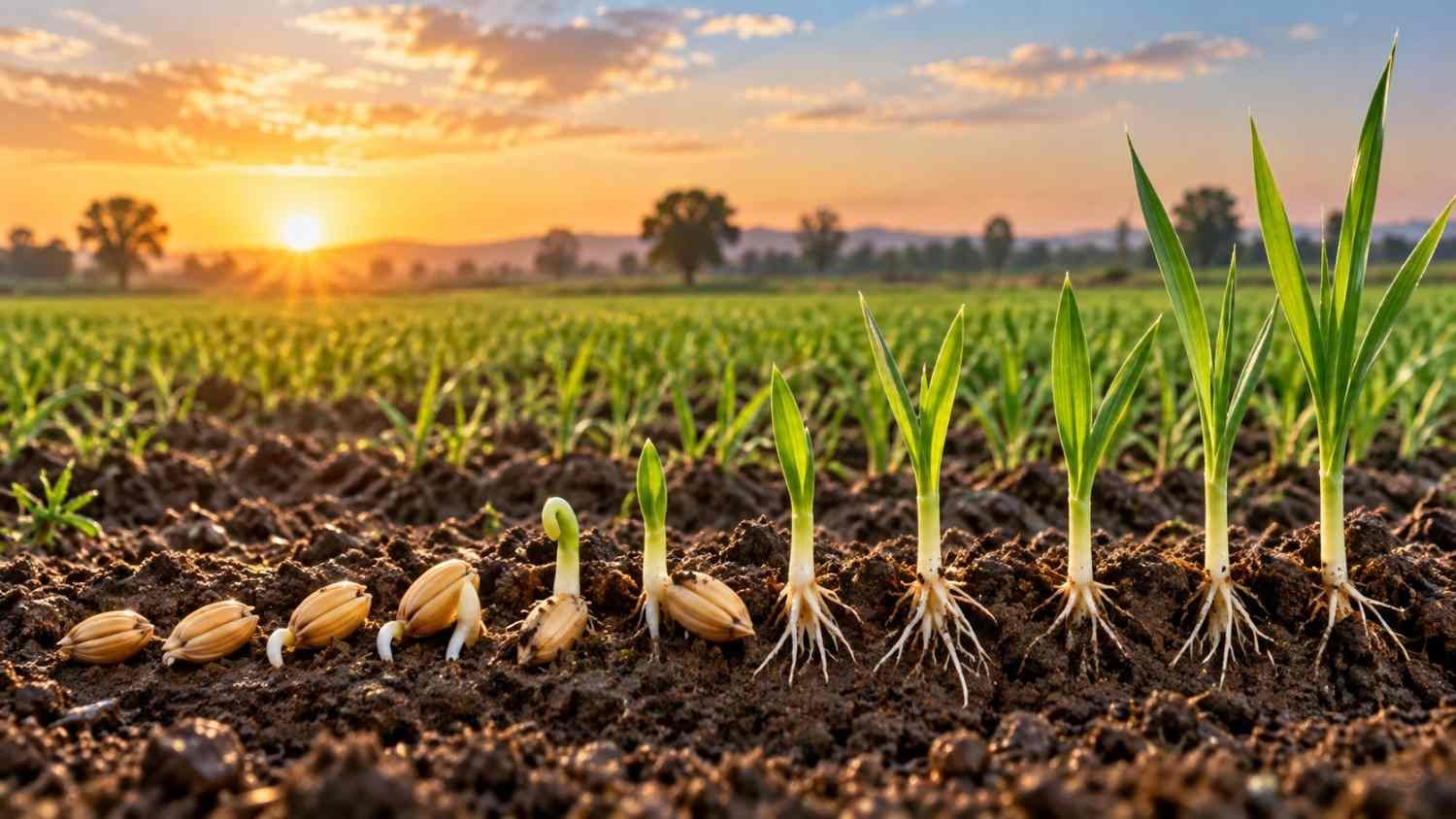
Barley Seed Germination Process & Time
Introduction
Barley seed germination determines how evenly your crop emerges after sowing. Poor germination leads to gaps in the field, while strong and uniform germination ensures healthy plant growth and better yield.
Many farmers lose yield before the crop even starts. Poor germination, wrong seed depth, or damp soil can ruin a good seed lot. The good news is that these problems are easy to prevent.
In this guide, we explain how barley seeds germinate, how long it takes, and what conditions help. You will also learn the right seed rate and simple tips from field practice. For the full crop plan, read our barley farming guide (2026).
Quick answer: Barley seed rate per acre is about 35–40 kg for timely sown, irrigated crops in India. Late sowing needs 45–50 kg per acre. Sow seeds 5–6 cm deep in rows 22 cm apart. Use treated, certified seeds with high germination for even stands and better yield.
Table of Contents
- What Is Barley Seed Germination?
- Barley Seed Rate per Acre
- Barley Seed Germination Process (Step-by-Step)
- Barley Germination Time
- Ideal Conditions for Barley Seed Germination
- How to Germinate Barley Seeds (Practical Guide)
- Common Problems in Barley Germination
- Tips to Improve Germination Rate
- FAQs
What Is Barley Seed Germination?
Barley seed germination is the start of life for the plant. A dry seed wakes up, absorbs water, and sends out its first root and shoot.
Good germination gives you a uniform field. Uniform plants flower together, mature together, and are easier to harvest. That is why seed quality matters as much as seed rate.
Barley Seed Rate per Acre
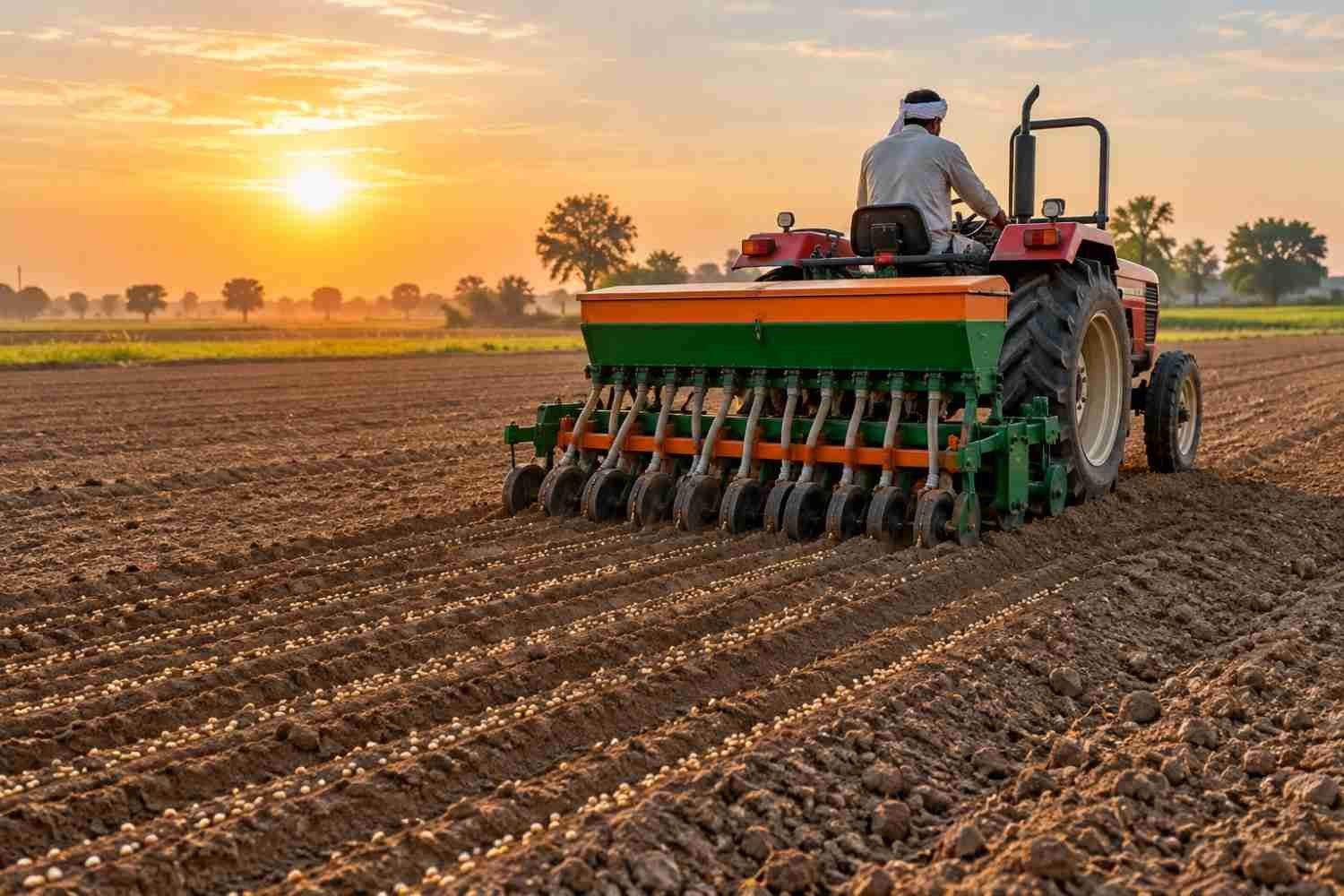
The right barley seed rate depends on sowing time, moisture, and seed size. Indian research institutes like ICAR suggest about 100 kg per hectare for timely sowing. That is close to 40 kg per acre.
Here is a simple guide:
- Timely sown, irrigated: 35–40 kg per acre
- Late sown (December): 45–50 kg per acre
- Rainfed or dryland: 35–40 kg per acre
- Row spacing: 22–23 cm
- Seed depth: 5–6 cm
For a deeper plan on barley seed rate per acre for high yield, check seed size too. Bold seeds weigh more, so adjust the quantity slightly. Always aim for 350–400 plants per square metre.
In North India, sowing is best from early to late November. Late sowing reduces tillers, so a higher seed rate helps cover the loss.
Barley Seed Germination Process (Step-by-Step)
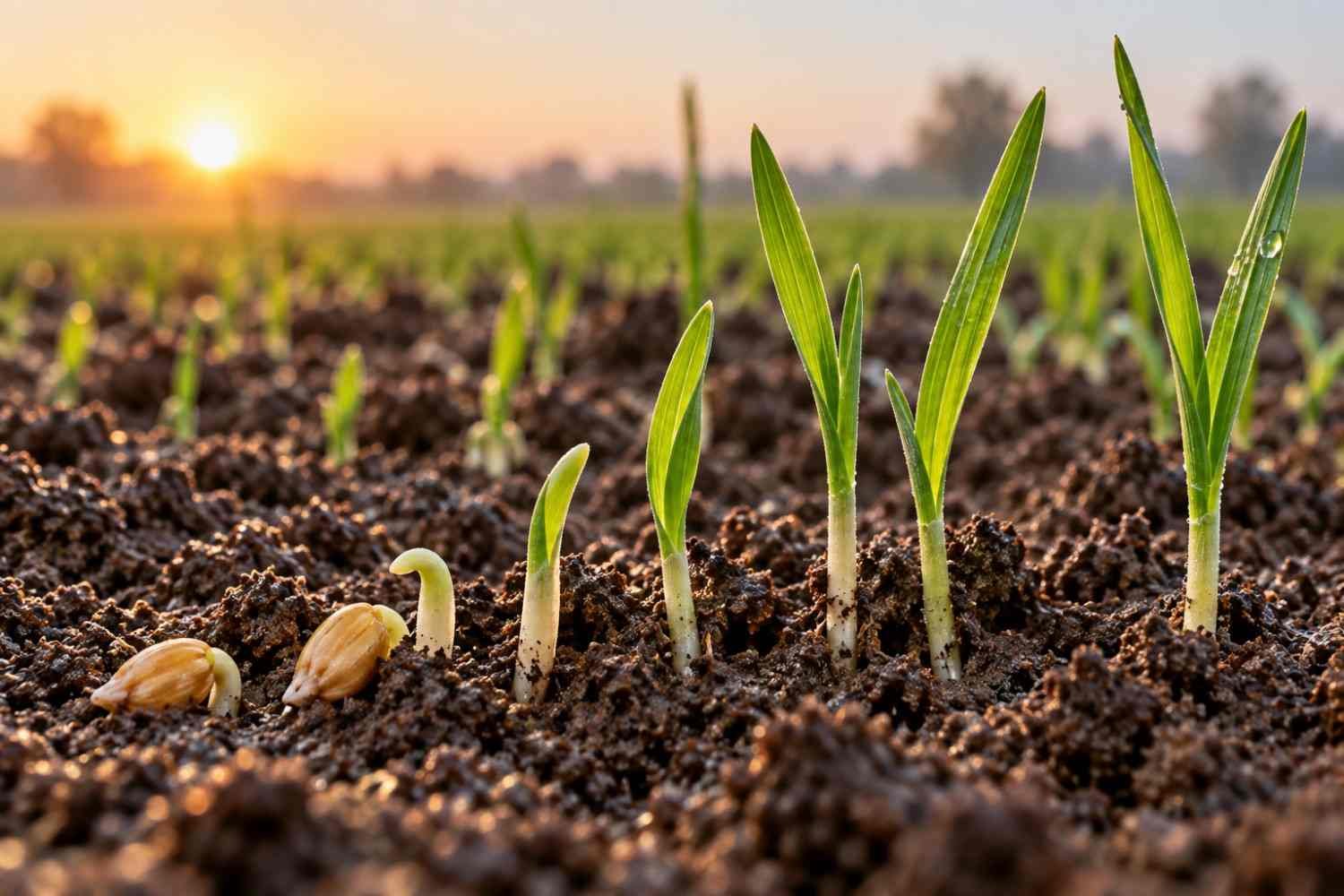
Germination follows a clear order. Knowing each stage helps you spot problems early.
Step 1: Water Absorption (Imbibition)
The dry seed soaks up water from moist soil. It swells and the seed coat softens. This stage takes 12 to 24 hours in good soil.
Step 2: Enzyme Activation
Water switches on enzymes such as amylase. These enzymes break stored starch into simple sugars. The sugars become food for the baby plant.
Step 3: Root Emergence
The first root, called the radicle, breaks through the seed coat. It anchors the seedling and starts drinking water. Barley usually shows several seminal roots soon after.
Step 4: Shoot Growth
A protective sheath called the coleoptile pushes upward through the soil. It guards the tender leaf inside. Deep sowing makes this stage slower and weaker.
Step 5: Leaf Development
The first green leaf cuts through the coleoptile and sees light. Photosynthesis begins. From here, the seedling no longer depends on seed reserves.
Barley Germination Time
Barley germination time is usually 4 to 7 days in field conditions. Warm and moist soil can bring it down to 3 days. Cold or dry soil can stretch it to 10 days.
In field practice, seeds sown at 5 cm depth in November soil emerge evenly in about 6 days. Seeds sown at 10 cm can take nearly two weeks and give patchy stands.
- Fresh certified seed: 4–6 days
- Cold soil (below 8°C): 8–10 days
- Old or damaged seed: Slow and uneven
Ideal Conditions for Barley Seed Germination
Barley is a hardy cool-season crop. Still, the right conditions give faster and cleaner germination.
Temperature for Barley Germination
The best temperature is 15–20°C. Seeds can sprout from about 4°C. Above 30°C, germination drops sharply.
Soil Type for Best Growth
Well-drained loam and sandy loam suit barley best. The ideal pH is 6.5 to 7.8. Barley also tolerates mild salinity better than wheat.
Water Requirement
Soil should be moist but not wet. Give a light pre-sowing irrigation if the field is dry. Avoid standing water, because seeds need air to breathe.
Sunlight Need
Seeds do not need light to sprout. Seedlings, however, need bright sunlight after emergence. Open fields with 8 to 10 hours of sun give strong tillering.
How to Germinate Barley Seeds (Practical Guide)
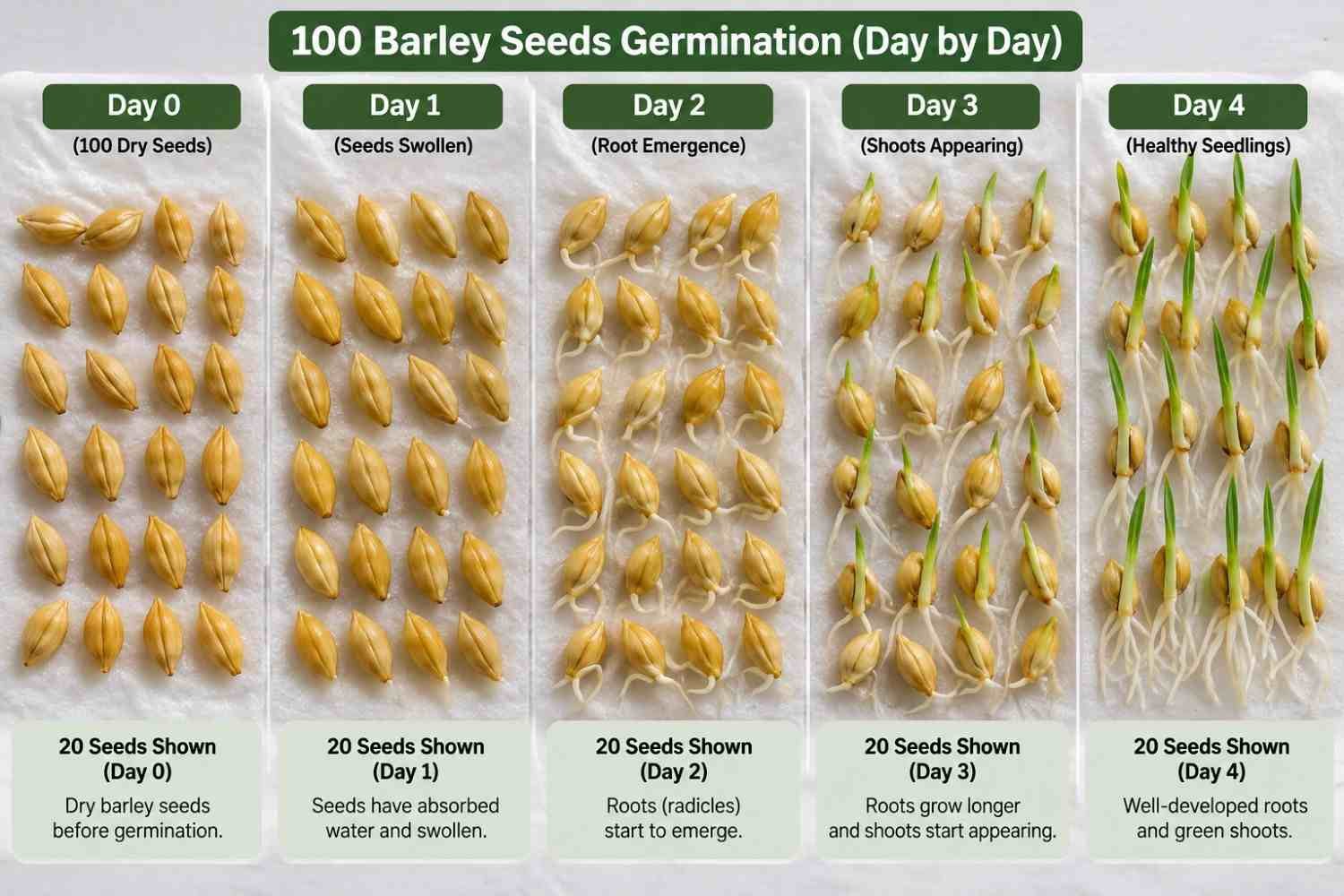
You can test germination at home before sowing. This takes just a week and saves a lot of money.
- Count out 100 barley seeds from your lot.
- Soak them in clean water for 6 to 8 hours.
- Place them between damp paper towels or cloth.
- Keep them in a room at 18–22°C.
- Count sprouted seeds after 5 to 7 days.
If 85 or more seeds sprout, the lot is good. Below 80, increase your seed rate or change the seed. For field sowing, treat seeds with a recommended fungicide like carboxin plus thiram before use.
Common Problems in Barley Germination
Low-Quality Seeds
Old, cracked, or mixed seeds give weak and patchy germination. Always buy certified seed with a clear test report. Check the lot number and date on the bag.
Overwatering Issue
Too much water cuts off oxygen. Seeds rot before they sprout. Heavy irrigation right after sowing is a common mistake, especially in clay soils.
Fungal Infection
Seed-borne diseases like loose smut and root rot attack young seedlings. Untreated seed is the main cause. Seed treatment is cheap and very effective.
Poor Soil Condition
Hard crust, salty patches, or poor tillage block emerging shoots. Prepare a fine, level seedbed. Add organic matter if your soil is weak.
Tips to Improve Germination Rate
- Use fresh, certified, graded seed from a trusted brand.
- Treat seed with fungicide before sowing.
- Sow at 5–6 cm depth, never deeper.
- Sow at the right time, when day temperature is mild.
- Give a light irrigation only if soil is dry.
- Use a seed drill for even spacing and depth.
Strong germination also helps you reach your full yield goal. For quality inputs, explore Agri Raise barley seeds, tested for purity and germination. You can also read the FAO guidance on cereal crops for global best practices.

Leave a comment


Comments(0)