
Blog
How to Control Yellow Mosaic Virus in Moong Crop
Moong crop, also known as green gram, is one of the most important pulse crops grown in India. Farmers like growing moong because it takes a short time, sells well, and helps the soil. However, one major problem that affects Moong Production is Yellow Mosaic Virus (YMV). This disease can reduce crop yield significantly if not controlled at the right time.
Yellow Mosaic Virus is one of the worst viral diseases for growing moong. The disease spreads fast through whiteflies and hurts plant growth, leaves, flowers, and pods. Finding it early and managing it well is important to protect the crop and increase yield.
This guide explains the causes, symptoms, spread, prevention, and best control methods for Yellow Mosaic Virus in moong crops.
What is Yellow Mosaic Virus in Moong?
Yellow Mosaic Virus is a viral disease commonly found in pulse crops such as moong, urad, soybean, and cowpea. In moong farming, the disease mainly attacks leaves and reduces the plant’s ability to perform photosynthesis.
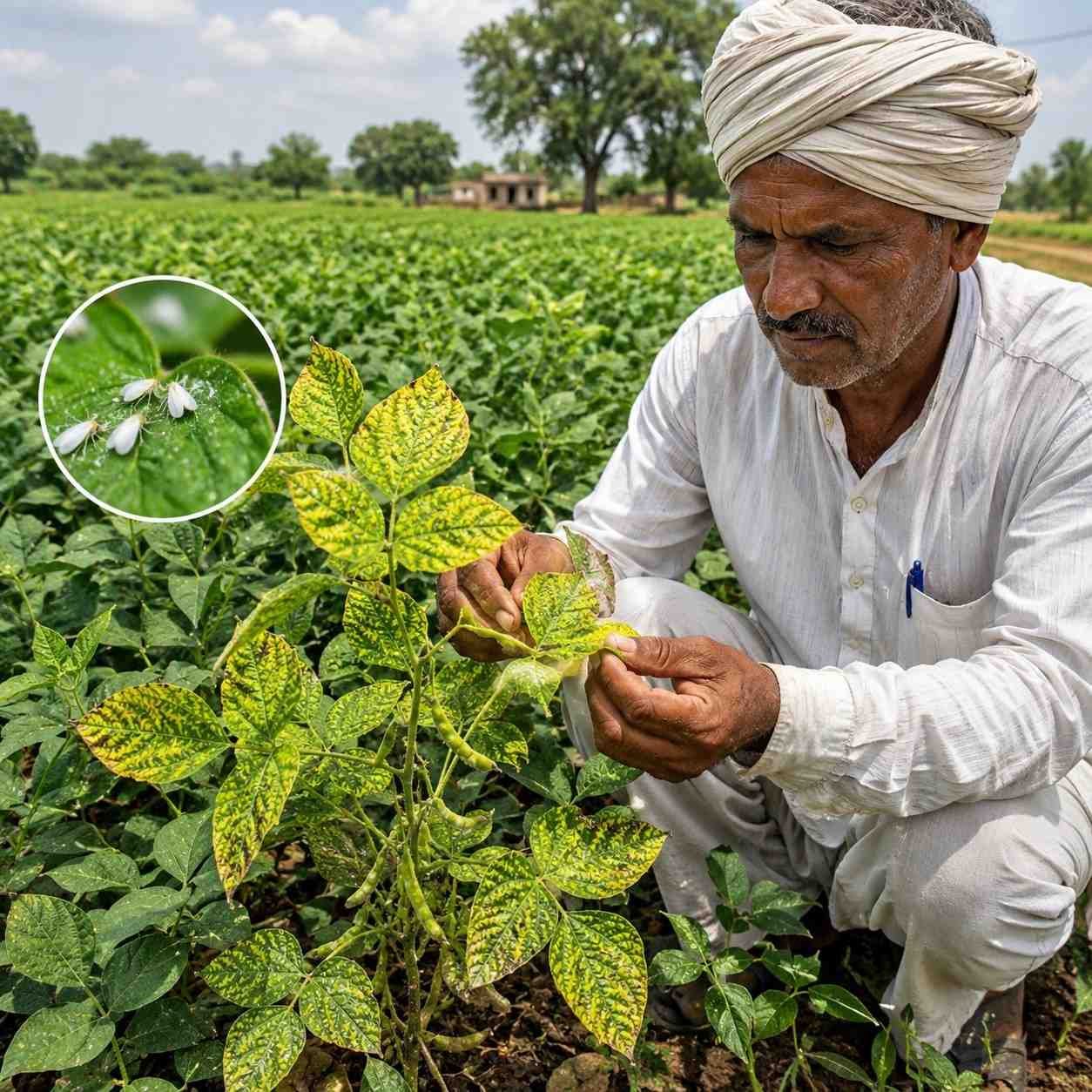
The infected leaves develop yellow patches or mosaic-like patterns. As the disease gets worse, the leaves turn all yellow, the plants stay weak, and there are fewer pods. Severe infection during early crop stages can lead to heavy yield losses.
The disease is mainly spread by whiteflies, which carry the virus from infected plants to healthy plants.
Causes of Yellow Mosaic Disease
Several factors are responsible for the development and spread of Yellow Mosaic Virus in moong crops.
Whitefly Infestation
Whiteflies are the primary carriers of the virus. When these insects feed on infected plants, they pick up the virus and transfer it to healthy plants.
Infected Seeds
Using low-quality or infected seeds can increase the risk of disease in the field.
Warm and Humid Weather
Hot weather and humidity help whiteflies thrive, which makes diseases spread faster.
Lack of Field Sanitation
The presence of weeds, infected crop residues, and volunteer plants can act as hosts for the virus.
Continuous Pulse Cultivation
Growing pulse crops in the same field over and over without changing crops leads to more diseases.
Symptoms of Yellow Mosaic Virus
Early identification of symptoms helps farmers manage the disease before it spreads widely.
Yellow Spots on Leaves
Small yellow spots begin to appear on young leaves.
Mosaic Pattern Formation
Leaves develop irregular yellow and green patches, creating a mosaic appearance.
Leaf Discoloration
In severe infection, the entire leaf may turn yellow.
Stunted Plant Growth
Affected plants remain shorter and weaker compared to healthy plants.
Reduced Flowering and Pod Formation
The disease affects reproductive growth, reducing pod numbers and seed development.
Poor Yield Quality
Seeds become smaller, shriveled, and low in market value.
How the Disease Spreads
Understanding disease spread is important for effective control.
Whitefly Transmission
Whiteflies spread the virus from infected plants to healthy crops during feeding.
Wind Movement
Whiteflies can travel by wind, increasing infection across nearby fields.
Infected Weeds
Certain weeds act as alternate hosts for the virus and help maintain infection sources.
Nearby Infected Fields
Fields located close to infected pulse crops have a higher risk of disease spread.
Prevention Methods for Healthy Crops
Preventive management is one of the best ways to reduce Yellow Mosaic Virus in moong farming.
Use Disease-Resistant Varieties
Selecting resistant or tolerant moong varieties can significantly reduce disease incidence.
Use Certified Seeds
Always use healthy and Certified Seeds from trusted agricultural sources.
Follow Proper Crop Rotation
Avoid growing pulse crops continuously in the same field. Rotate with cereals or non-host crops.
Maintain Field Cleanliness
Remove weeds and infected plants regularly to reduce virus sources.
Timely Sowing
Early sowing can help avoid peak whitefly activity in some regions.
Balanced Fertilizer Application
Proper nutrient management improves plant strength and resistance against diseases.
Best Control Methods for Yellow Mosaic Virus
Viral diseases can't be fully cured after you get them, but there are ways to help stop them from spreading and lessen their effects.
Remove Infected Plants
Uproot and destroy infected plants immediately after noticing symptoms. This helps reduce virus spread to healthy plants.
Control Whitefly Population
Managing whiteflies is the most important step in controlling Yellow Mosaic Virus.
Farmers commonly use recommended insecticides under agricultural guidance to reduce whitefly infestation. Spraying should be done during early infestation stages for better results.
Use Yellow Sticky Traps
Yellow sticky traps help monitor and reduce whitefly populations naturally.
Avoid Excess Nitrogen Fertilizer
Too much nitrogen encourages soft vegetative growth, which attracts whiteflies.
Maintain Proper Plant Spacing
Good air circulation helps reduce insect population buildup.
Monitor the Field Regularly
Regular crop inspection helps detect disease symptoms early.
Role of Whiteflies in Disease Spread
Whiteflies are the major vectors responsible for Yellow Mosaic Virus transmission.
These tiny insects suck sap from leaves and transfer the virus during feeding. Whiteflies breed quickly in warm weather, making it hard to manage diseases if not controlled early.
Conditions Favoring Whiteflies
- Warm temperatures
- Humid climate
- Dense crop canopy
- Excessive nitrogen application
- Presence of weeds
Whitefly Management Tips
- Keep fields weed-free
- Install sticky traps
- Use recommended sprays carefully
- Avoid overcrowded planting
- Encourage natural predators
Organic Ways to Protect Moong Crop
Many farmers prefer eco-friendly methods to reduce chemical use in pulse cultivation.
Neem Oil Spray
Neem-based products help reduce whitefly populations naturally.
Garlic and Chili Extract Spray
Traditional organic sprays may help repel insects.
Use of Bio-Control Agents
Natural predators like ladybird beetles help control whiteflies.
Crop Diversity
Intercropping and mixed farming can reduce pest buildup.
Soil Health Improvement
Healthy soil supports stronger plant growth and natural resistance.
Tips for Better Disease Management
Effective disease management requires a combination of preventive and control practices.
Choose Suitable Varieties
Select varieties recommended for your local climate and disease resistance.
Monitor Crop Frequently
Check leaves regularly for yellow spots and insect activity.
Avoid Late Sowing
Late sowing often increases exposure to whiteflies.
Follow Recommended Agronomic Practices
Balanced irrigation, fertilizer application, and spacing improve crop health.
Avoid Water Stress
Both excessive and insufficient irrigation can weaken plants.
Take Early Action
Immediate response during initial infection stages reduces large-scale spread.
Importance of Disease Management in Moong Farming
Yellow Mosaic Virus can cause serious economic losses for farmers if ignored. Proper management improves:
- Crop health
- Yield quality
- Pod formation
- Market value
- Farmer profitability
Healthy crops also improve soil fertility because moong plants help fix atmospheric nitrogen.
Common Mistakes Farmers Should Avoid
Many farmers unknowingly increase disease problems through poor crop management practices.
Ignoring Early Symptoms
Delaying control measures allows rapid disease spread.
Excessive Chemical Use
Overuse of chemicals can damage beneficial insects and create resistance problems.
Using Poor Quality Seeds
Low-quality seeds may carry diseases and reduce germination.
Lack of Crop Rotation
Continuous pulse cultivation increases disease pressure in the field.
Poor Weed Management
Weeds often act as hosts for whiteflies and viruses.
Benefits of Early Disease Control
Early management provides several advantages:
- Reduced crop loss
- Better plant growth
- Improved flowering
- Higher yield potential
- Lower management cost
- Better grain quality
Farmers who check their fields often get better results than those who wait to manage them.
Sustainable Moong Farming Practices
Sustainable farming practices help reduce disease problems naturally while improving long-term soil productivity.
Integrated Pest Management
Combining cultural, biological, and mechanical methods provides better control.
Soil Testing
Soil analysis helps farmers apply balanced nutrients according to crop requirements.
Proper Irrigation Management
Avoid excessive moisture conditions that favor pest development.
Use Organic Matter
Farmyard manure and compost improve soil health and microbial activity.
Future of Moong Farming in India
Demand for pulses in India is rising due to a greater emphasis on protein-rich diets and sustainable farming practices. Moong farming remains a profitable option for many farmers due to:
- Short crop duration
- Good market demand
- Nitrogen-fixing ability
- Suitability for crop rotation
Keeping diseases like Yellow Mosaic Virus under control helps farms grow more and earn more money.
FAQs
How do you treat yellow mosaic virus in mung beans?
Remove infected plants, control whiteflies, and keep the field clean to reduce disease spread.
How to control yellow mosaic virus?
Use healthy seeds, monitor whiteflies, follow proper Moong Farming practices, and inspect fields regularly.
What is the best way to control mosaic virus?
Early prevention and whitefly control are the best ways to manage mosaic virus in crops.
What is the fungicide for yellow mosaic virus?
Yellow Mosaic Virus is a viral disease, so fungicides are usually not effective against it.
What is the fungicide for mung beans?
Farmers use suitable fungicides based on the disease affecting the moong crop.
What are the best ways to control TMV?
Use disease-free seeds, remove infected plants, maintain field hygiene, and control pests regularly.
Conclusion
Yellow Mosaic Virus is one of the most harmful diseases in moong farming. Whiteflies spread this disease, and it can reduce crop yield if not controlled on time. Keep fields clean, check crops and control whiteflies to protect plants.
Good seeds help crops grow healthy.
Proper fertilizers support better plant growth.
Crop rotation helps reduce disease problems.
Regular field checks help detect problems early.
Organic and integrated farming methods support healthy crop growth.
Proper care helps control Yellow Mosaic Virus and improve yield.

Leave a comment


Comments(0)