
Blog
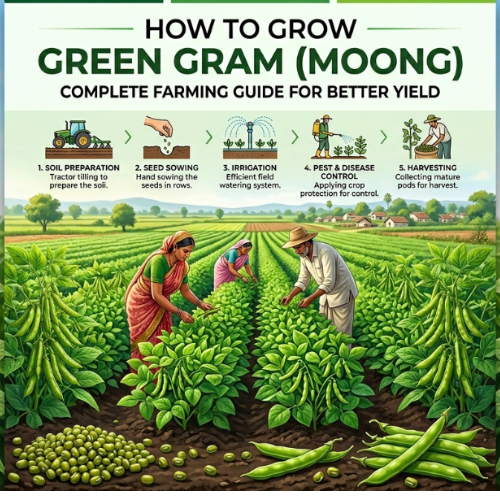
How to Grow Green Gram (Moong): Complete Farming Guide for Better Yield
Green gram, commonly known as moong, is one of the most widely cultivated pulse crops in India. Farmers like to grow green grams because they need less water and sell well in the market. People like moong a lot for its good nutrition and often use it for dal, sprouts, snacks, and animal feed.
With proper cultivation practices, farmers can achieve healthy crop growth and better profitability. This complete green gram farming guide explains how to grow green gram step by step. This guide shows you how to:
Prepare soil
Choose seeds
Water plants
Use fertilizers
Control pests
Harvest crops
Understand how to make a profit
Introduction to Green Gram Farming
Farmers prefer Green Gram Farming because the crop requires less water and has good market demand.
Moong farming is considered beneficial because:
- It requires less irrigation
- The crop matures within a short duration
- It improves soil fertility through nitrogen fixation
- It fits well in crop rotation systems
- Market demand remains high throughout the year
- Cultivation cost is comparatively lower
Green gram farming is suitable for both small-scale and commercial farmers.
Best Soil and Climate for Green Gram Cultivation
Choosing suitable soil and climate conditions is important for successful moong farming.
Suitable Soil for Green Gram
Green gram grows best in:
- Sandy loam soil
- Loamy soil
- Well-drained black soil
The ideal soil pH should range between 6.0 and 7.5.
It's best to avoid heavy clay soil and fields that stay wet. This is because having too much water can harm plant roots and lead to lower crop yields.
Climate Requirement for Moong Farming
Green gram is a warm-season crop and performs well in temperatures between 25°C and 35°C.
The crop requires:
- Moderate rainfall
- Good sunlight
- Warm climatic conditions
Excess rainfall during flowering may reduce pod development and affect yield.
In Which Month Is Green Gram Grown in India?
Green gram can be cultivated during multiple seasons depending on regional climate conditions.
Kharif Season
- Sowing Time: June to July
- Harvesting Time: September to October
Summer Season
- Sowing Time: February to March
- Harvesting Time: May to June
Rabi Season
Farmers in southern and irrigated areas also plant green gram in the Rabi season.
Farmers should select sowing time according to water availability and local weather conditions.
Land Preparation for Green Gram Farming
Proper land preparation improves seed germination and root growth.
Steps for Land Preparation
- Plough the field 2–3 times
- Remove weeds and old crop residues
- Level the land properly
- Ensure good drainage system
Farmers can add organic compost or manure before planting to better the soil's fertility and moisture.
How to Grow Green Gram Seeds
Seed quality directly affects crop growth and yield. Farmers should always choose healthy and Certified Moong Seeds that are right for their local climate.
Green Gram Seed Treatment
Seed treatment helps protect crops from fungal and seed-borne diseases.
Farmers commonly use:
- Biofertilizers
- Fungicides
- Rhizobium culture
Rhizobium treatment improves nitrogen fixation and root development.
Green Gram Seed Rate Per Acre
The recommended seed rate depends on the variety and sowing method.
Recommended Seed Rate
Farmers generally use:
- 8–12 kg seeds per acre
Recommended Spacing
- Row spacing: 30 cm
- Plant spacing: 10 cm
Proper spacing improves air circulation, sunlight exposure, and crop health.
How to Sow Green Gram Seeds
Green gram seeds can be sown through:
- Broadcasting
- Seed drill method
- Line sowing
Line sowing is commonly recommended because it:
- Improves weed management
- Makes irrigation easier
- Supports better plant growth
Seeds should be sown at a depth of around 3–5 cm.
Irrigation Management in Green Gram Farming
Green gram requires comparatively less water than many other crops.
Critical Irrigation Stages
Proper irrigation is important during:
- Flowering stage
- Pod formation stage
Excess irrigation should be avoided because waterlogging may lead to root rot and fungal diseases.
Summer Green Gram Irrigation
Summer moong crops may require irrigation every 7–10 days depending on soil moisture conditions.
Which Fertilizer Is Best for Green Gram?
Balanced nutrient management is important for healthy crop growth and pod development.
Organic Fertilizers for Green Gram
Farmers can use:
- Farmyard manure
- Vermicompost
- Organic compost
Chemical Fertilizers
Commonly used nutrients include:
- Nitrogen (N)
- Phosphorus (P)
- Potassium (K)
Phosphorus plays an important role in root development and flowering.
Soil testing before fertilizer application helps improve nutrient efficiency.
Weed Management in Moong Farming
Weeds compete with crops for nutrients, water, and sunlight.
Weed Control Methods
Manual Weeding
Usually performed around 20–25 days after sowing.
Mulching
Helps suppress weed growth and conserve soil moisture.
Herbicide Application
Selective herbicides may be used under agricultural expert guidance.
Timely weed management significantly improves crop yield.
Green Gram Pest Control Methods
Pest attacks can reduce crop quality and productivity.
Common Pests in Green Gram Farming
Aphids
These pests suck plant sap and weaken the crop.
Whiteflies
Whiteflies spread viral diseases like yellow mosaic virus.
Pod Borers
Pod borers damage developing pods and reduce grain quality.
Pest Control Tips for Green Gram
- Maintain field cleanliness
- Avoid excessive nitrogen application
- Use neem-based organic sprays
- Monitor pest population regularly
- Use recommended pesticides only when necessary
Integrated pest management practices help reduce crop losses and improve sustainability.
Diseases in Green Gram Crop
Disease management is important for maintaining healthy crop growth.
Common Diseases in Green Gram
Yellow Mosaic Virus
This is one of the most damaging diseases in moong farming.
Symptoms include:
- Yellow patches on leaves
- Stunted plant growth
- Reduced pod formation
Powdery Mildew
White powder-like fungal growth appears on leaves and stems.
Root Rot
Occurs mainly due to excess moisture and poor drainage.
Disease Prevention Tips
- Use disease-resistant seed varieties
- Follow crop rotation
- Avoid waterlogging
- Use treated seeds
- Maintain proper field hygiene
Preventive management helps reduce disease spread and yield loss.
Green Gram Intercropping with Bajra
Many farmers practice green gram intercropping with bajra and maize.
Benefits of Intercropping
- Better land utilization
- Reduced pest pressure
- Improved farm income
- Better soil fertility
Green gram also improves nitrogen content in soil, benefiting companion crops.
How Long Does Green Gram Take to Grow?
Green gram is a short-duration pulse crop.
Crop Duration
The crop usually matures within:
- 60–75 days
Some improved seed varieties may mature earlier under favorable conditions.
Short crop duration allows farmers to grow additional crops within the same year.
Green Gram Harvesting Time
Harvesting should be done when:
- Pods turn brown or black
- Leaves start drying
Delayed harvesting may lead to pod shattering and seed loss.
Harvesting Methods
Manual Harvesting
Common among small farmers.
Mechanical Harvesting
Used in larger farming operations.
After harvesting, pods should be dried properly before storage.
Green Gram Yield Per Acre
Yield depends on:
- Seed quality
- Soil fertility
- Irrigation management
- Pest control
- Climate conditions
Average Yield
Farmers can achieve approximately:
- 4–6 quintals per acre under normal conditions
Improved farming practices and quality seeds may increase productivity further.
What Is the Profit Per Acre of Green Gram?
Green gram farming is considered profitable because:
- Input costs are relatively low
- Crop duration is short
- Market demand remains stable
Factors Affecting Profitability
- Seed variety
- Yield per acre
- Market price
- Irrigation cost
- Pest management expense
Farmers using quality seeds and scientific farming methods generally achieve better returns.
Best Green Gram Seed Varieties for Better Yield
Selecting the right seed variety is one of the most important steps in successful moong cultivation.
Features of Good Green Gram Seeds
- High germination rate
- Disease resistance
- Better pod formation
- Early maturity
- Strong yield potential
Farmers should choose seed varieties suitable for local climate and soil conditions.
Using certified and high-quality seeds helps improve crop performance and long-term productivity.
How to Grow Green Gram at Home
Green gram can also be grown in home gardens and containers.
Steps to Grow Green Gram at Home
- Choose a pot with drainage holes
- Fill it with fertile soil
- Sow healthy green gram seeds
- Water lightly
- Keep the container in sunlight
Seeds generally germinate within a few days and can be used for sprouts or home cooking.
Benefits of Green Gram Farming
Green gram farming offers multiple agricultural and economic benefits.
Major Benefits
- Improves soil fertility
- Requires less water
- Suitable for crop rotation
- Short growing duration
- Strong market demand
- Lower cultivation cost
Moong farming is considered a sustainable and profitable farming option for Indian farmers.
Why Farmers Should Choose Quality Seeds
Seed quality plays an important role in crop productivity and profitability. Using certified and disease-resistant seeds helps improve crop performance and productivity.
Farmers should always select seeds according to:
- Regional climate
- Soil condition
- Water availability
- Disease resistance
Proper seed selection supports long-term farming success.
FAQs
How long does green gram take to grow?
Green gram usually takes around 60–75 days to mature depending on the variety and climate conditions.
Which fertilizer is best for green gram?
A balanced mix of nitrogen, phosphorus, potassium, and organic manure is commonly used in green gram farming.
In which month is green gram grown?
Green gram is mainly grown during June–July for Kharif season and February–March for summer season.
How many kgs of green gram seeds are needed per acre?
Farmers generally use around 8–12 kg seeds per acre depending on variety and spacing.
Can green gram grow at home?
Yes, green gram can be grown easily in pots, containers, and kitchen gardens.
Conclusion
Green gram farming, also known as moong cultivation, is a profitable and sustainable farming option. Proper soil preparation, quality seeds, balanced fertilizers, timely irrigation, and pest management help improve crop growth and yield. Using better farming techniques and approved seeds can improve productivity, reduce crop losses, and boost profits. Whether grown on farms or at home, green gram remains one of the most important pulse crops in Indian agriculture.

Leave a comment


Comments(0)