
Blog
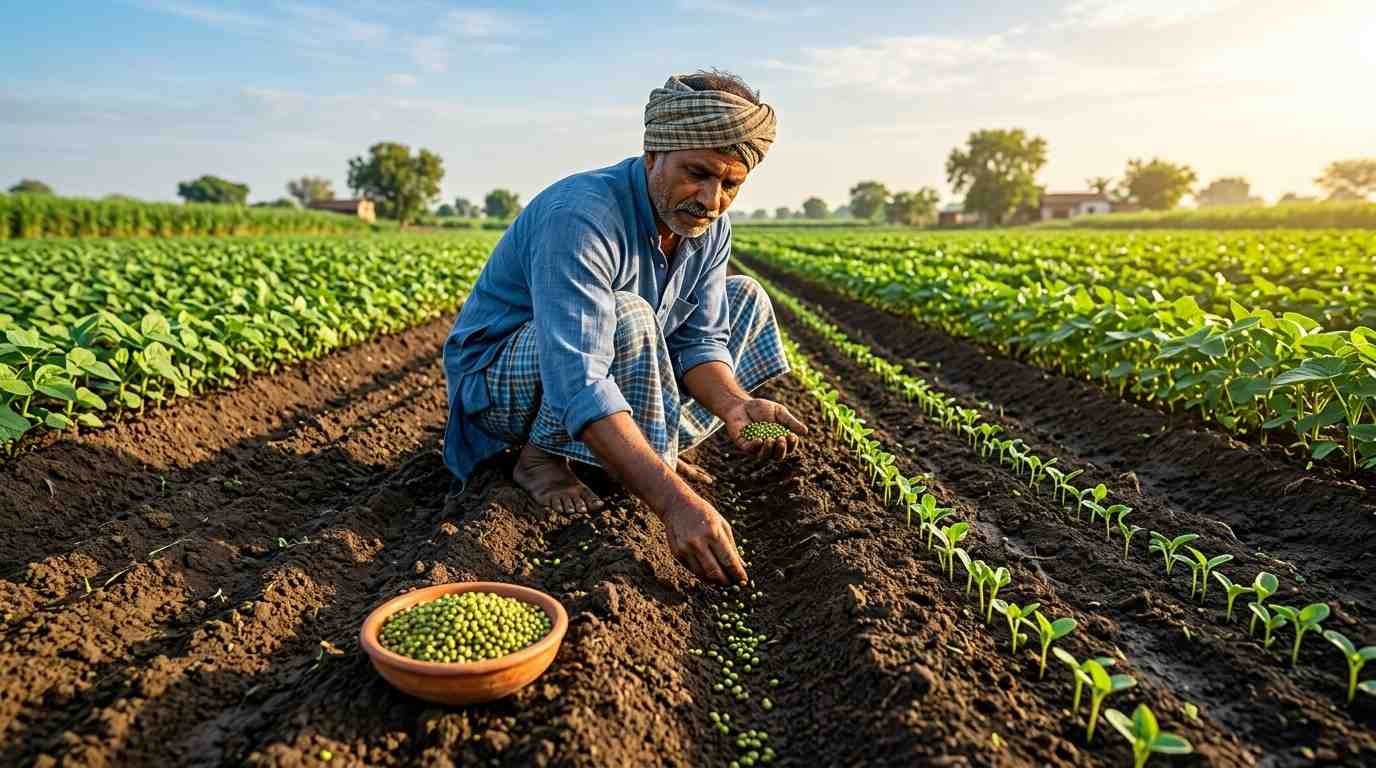
Moong Seed Rate Per Acre: Complete Guide for Better Crop Yield
Moong Seed Rate Per Acre: Complete Guide for Better Crop Yield
Introduction
Choosing the right amount of moong seeds for one acre of land is very important for a good crop. If farmers use too few seeds or too many seeds, the plants will not grow well. Farmers should also follow the right moong farming practices to achieve healthy crop growth and better yields.
Using the correct seed rate helps all the plants grow evenly and strongly. It also helps the plants get enough nutrients from the soil. This means farmers can harvest more moong beans at the end of the season. A good seed rate also saves money because it reduces seed wastage. Whether growing moong during the Kharif or summer season, following the recommended seed rate is essential for a healthy crop and higher productivity.
What Is Moong Seed Rate?
Moong seed rate tells us how much seed we need for one acre of land. Farmers use this amount to grow moong plants properly and evenly. The seed rate depends on how big or small the seeds are. It also depends on how many seeds actually grow into plants. The way farmers plant the seeds also changes the amount needed. Spacing between plants matters too, since more space means fewer seeds. Weather and season also affect how much seed is required. Usually, farmers use about eight to ten kilograms per acre. This helps the plants grow healthy without being too crowded. Good seed rate gives farmers a better and bigger harvest.
Using the correct seed rate provides:
- Uniform crop establishment
- Better plant population
- Efficient use of nutrients
- Improved sunlight penetration
- Higher grain yield
Maintaining an optimum plant stand is the foundation of profitable moong farming.
Recommended Moong Seed Rate Per Acre
The recommended seed rate varies depending on the season and cultivation method.
|
Season |
Seed Rate |
|
Kharif |
8–10 kg/acre |
|
Summer |
10–12 kg/acre |
Seed Rate Based on Variety
Different moong varieties have different seed sizes. Larger seeds require a slightly higher seed rate than smaller-seeded varieties. Always follow the recommendations for the specific variety you are planting.
Factors That Affect Moong Seed Rate
Several factors influence the amount of seed needed per acre.
Germination Percentage
High-germination seeds establish a healthy crop with fewer seeds. Poor-quality seeds may require a higher seed rate to compensate for lower germination.
Seed Quality
Using high-quality seeds is essential for achieving healthy crop growth and better yields. Seeds with a high germination rate produce strong seedlings, uniform plant growth, and improved crop performance. Farmers should always choose reliable and high-performing moong seed varieties to maximize productivity. Premium varieties such as AR Super Gold and AR Green Gold Moong Seed are developed to support better germination, vigorous plant growth, and consistent field performance under suitable farming conditions. Selecting quality seeds is the first step toward a successful and profitable harvest.
Sowing Method
Machine sowing is a smart way to plant seeds using a special machine. This machine drops seeds at the right depth and at equal distances from each other. Because of this careful placement, no seeds are wasted or dropped too close together. Farmers who use machines to sow seeds need fewer seeds than those who scatter seeds by hand. Broadcasting scatters seeds unevenly, so farmers plant extra seeds. Machine sowing saves seeds, saves money, and helps crops grow evenly.
Soil Type
Heavy soils and light soils may influence emergence and plant establishment. Soil preparation also plays an important role.
Irrigation
Farmers need enough water for their seeds to grow well. Fields that get regular watering, called irrigation, help seeds sprout better than fields that depend only on rain. When more seeds sprout successfully, farmers don't need to plant extra seeds to make up for the ones that fail. This means watered fields help farmers use just the right amount of seeds. Good watering leads to strong and healthy young plants.
Row Spacing and Plant Spacing
Proper spacing complements the correct seed rate.
- Row spacing: 30–45 cm
- Plant spacing: 10–15 cm
Giving plants enough space lets in air and sunlight, keeping them healthy.
How to Calculate Moong Seed Rate Per Acre
Farmers can estimate the seed requirement based on:
- Germination percentage
- Seed size
- Row spacing
- Plant spacing
- Expected plant population
Checking the right seed amount before planting stops seeds from being wasted.
Best Sowing Practices for Higher Yield
Good sowing practices play a big role in helping farmers get a better harvest. When seeds are planted the right way, plants grow strong, healthy, and give more yield in the end. Here are some important sowing practices that help achieve this:
Choosing Good Seeds
Farmers should pick seeds that are healthy, clean, and free from disease. Using good quality seeds is the first step toward a successful crop, because weak or damaged seeds often grow into weak plants.
Treating the Seeds
Before sowing, seeds are often treated with fungicides or biofertilizers. This protects them from seed-borne diseases and helps them grow faster and stronger right from the start.
Sowing at the Right Time
Every crop has a best season for sowing. Planting seeds too early or too late can affect how well they grow, so following the correct sowing time is very important.
Maintaining Proper Spacing
Seeds should not be planted too close together or too far apart. Correct spacing gives each plant enough sunlight, water, and nutrients to grow properly without competing with its neighbors.
Sowing at the Correct Depth
Planting seeds too deep or too shallow in the soil can stop them from sprouting well. Each seed has an ideal depth that helps it germinate easily.
Preparing the Soil Well
Before sowing, the soil should be ploughed and leveled properly. Soft, well-prepared soil allows roots to spread easily and helps seeds absorb water and nutrients better.
Using the Right Method of Sowing
Farmers can choose different sowing methods, such as broadcasting, drilling, or transplanting, depending on the crop. Choosing the right method ensures seeds are placed evenly and correctly.
By following these simple but important practices, farmers can improve germination, grow healthier plants, and achieve a higher yield at the end of the season.
Common Mistakes Farmers Should Avoid
Some common errors can reduce crop productivity:
- Using too much seed
- Using insufficient seed
- Ignoring seed treatment
- Poor field preparation
- Incorrect row spacing
- Planting low-quality seed
Avoiding these mistakes improves crop uniformity and overall yield.
Tips to Increase Moong Crop Yield
- Select high-quality moong seeds.
- Use the recommended seed rate.
- Prepare a fine seedbed.
- Follow balanced nutrient management.
- Irrigate at critical growth stages.
- Monitor weeds, pests, and diseases regularly.
- Harvest the crop at the proper maturity stage.
Why Choose Quality Moong Seeds
Quality seed is one of the most valuable investments in farming. Premium moong seed varieties offer:
- Better germination
- Strong seedling vigor
- Improved disease tolerance
- Uniform maturity
- Higher yield potential
Choosing seeds from a trusted supplier helps farmers achieve consistent performance under different growing conditions.
Frequently Asked Questions
What is the ideal moong seed rate per acre?
About 8–10 kg of seed per acre is ideal for good moong crop growth.
Does seed quality affect seed rate?
Yes, better quality seeds need a slightly lower rate due to higher germination.
What is the best spacing for moong?
Keep 30 cm between rows and 10 cm between plants for best growth.
Can I use the same seed rate for all moong varieties?
No. Seed size and germination percentage vary among varieties.
Does machine sowing reduce seed requirement?
Yes. Machine sowing places seeds uniformly and often reduces seed wastage.
Conclusion
Using the right amount of moong seeds for each acre helps the crop grow well. Farmers should also use good quality seeds and plant them with proper spacing. Sowing seeds at the right time is very important too. Good seed rate leads to a strong and healthy crop. Taking care of the crop properly also helps it grow better.
All these steps together help farmers get more crops and more profit. Choosing good quality moong seeds is the first step to success.

Leave a comment


Comments(0)