
Blog
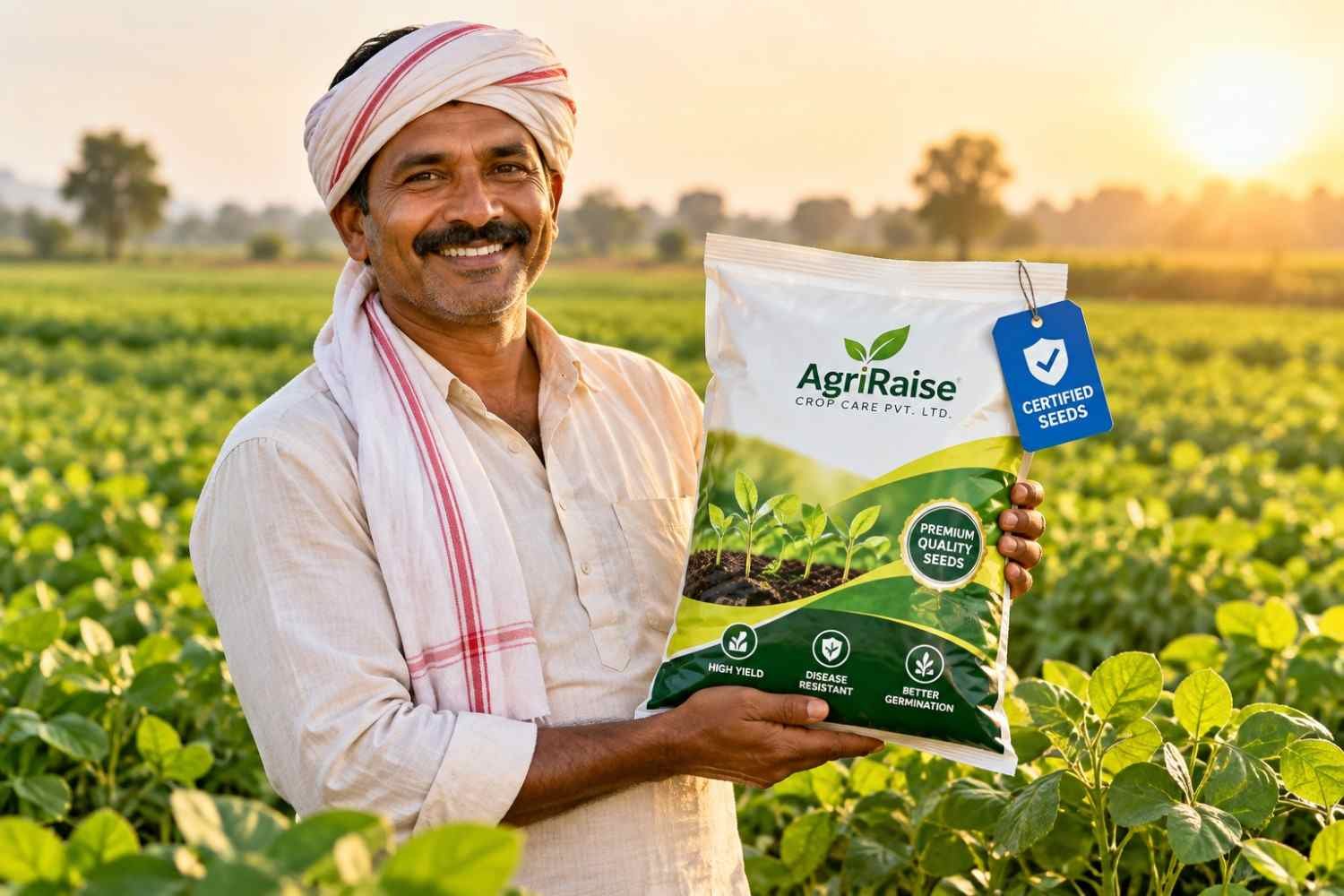
What Makes a Seed 'Certified'? Complete Buyer's Guide
What Makes a Seed 'Certified'? Complete Buyer's Guide
Certified seeds are seeds grown, inspected, and tested under official supervision. An approved seed certification agency checks their genetic purity, germination rate, and physical quality. Only seeds that pass every standard get a certification tag. This tag guarantees the seed is true to its variety and ready for healthy growth.
Introduction
Certified seeds can decide whether your season ends in joy or heartbreak. Many farmers and gardeners have lost weeks of work to poor seed. The plants come up patchy, weak, or completely different from what was promised.
The problem usually starts before the seed touches the soil. A cheap packet without proof of quality is a gamble. You may pay less at the shop and lose far more at harvest.
This guide explains what makes a seed "certified" in simple words. You will learn how certification works, how to read a tag, and where to buy safely. Use it to buy with confidence.
Table of Contents
- What Are Certified Seeds?
- Why Choose Certified Seeds
- How Seed Certification Works in India
- Requirements for Seed Certification
- Classes of Seed and Tag Colours
- Certified vs Truthful Seeds
- Quality Seeds for Your Garden
- How to Check Certified Seeds Before Buying
- Where to Buy Certified Seeds
- How to Pick a Certified Seeds Company in India
- Common Buying Mistakes to Avoid
- Storage and Sowing Tips
- FAQs
- Conclusion
What Are Certified Seeds?
Certified seeds are seeds produced under a strict, government-backed quality system. In India, this system follows the Seeds Act, 1966 and the Seeds Rules, 1968. State seed certification agencies carry out the checks.
Every lot is traced back to its source. Inspectors visit the seed crop in the field. Labs then test the harvested seed before any tag is issued.
The Meaning Behind the Tag
A certification tag is proof, not decoration. It tells you the seed passed field and lab checks. It also names the variety, lot number, and test date.
Think of it as a report card for the seed. Without it, you are trusting the seller's word alone.
Who Certifies Seeds in India?
State Seed Certification Agencies handle the work in each state. The Central Seed Committee and the Central Seed Certification Board guide the standards. Odisha, for example, has its own state certification agency.
Farmers can read more on the official Ministry of Agriculture portal . It explains the legal framework in detail.
Why Choose Certified Seeds
Choosing certified seeds is the cheapest insurance a grower can buy. The extra cost per packet is small. The protection against crop failure is large.
Field studies and extension advice from ICAR consistently link quality seed with higher yields. Good seed alone can lift productivity noticeably, even with the same soil and water. You can explore ICAR's guidance at ICAR's official website.
Key Benefits of Certified Seeds
- True to variety: You get exactly the crop you paid for.
- High germination: More seeds sprout, so fewer gaps appear in the field.
- Better vigour: Seedlings grow fast and resist early stress.
- Cleaner seed: Fewer weed seeds and less disease carry-over.
- Even crop: Plants mature together, which makes harvesting easier.
- Legal protection: You can complain if the seed fails its standards.
A Real-Life Example
Take a paddy farmer with two acres. He buys loose, unlabelled seed to save a few hundred rupees. Germination turns out weak, and he must re-sow half the field.
He loses two weeks and pays for extra seed and labour. That "saving" quickly turns into a loss. Certified seed would have avoided this.
Who Benefits Most?
Small and marginal farmers gain the most, since one failed season hurts badly. Kitchen gardeners benefit too. Even a small vegetable patch deserves seeds that sprout well.
How Seed Certification Works in India
Seed certification is a step-by-step process. Each stage filters out weak or mixed seed. Skipping any step breaks the chain of trust.
Step-by-Step Certification Process
- Source verification: The producer must start with approved foundation or breeder seed. Agencies check the source tags and records.
- Registration: The seed grower registers the plot with the certification agency. Area, crop, and variety are recorded.
- Field inspection: Inspectors visit the crop at key growth stages. They check isolation distance, off-type plants, and disease.
- Harvest and processing: The crop is harvested, dried, cleaned, and graded. Poor or damaged grains are removed.
- Lab testing: Samples go to an approved seed testing laboratory. Purity, germination, and moisture are measured.
- Tagging and sealing: Passed lots receive an official tag and seal. Failed lots are rejected or sold as ordinary grain.
Why Field Inspection Matters
Many problems cannot be seen in a lab. Off-type plants and pollen contamination show up in the field. That is why inspectors visit more than once.
Isolation distance also matters for cross-pollinated crops. A neighbouring variety can spoil genetic purity. Inspectors reject plots that break these rules.
Requirements for Seed Certification
The requirements for seed certification cover the field, the seed, and the paperwork. Each crop has its own minimum standards. These are set under the Indian Minimum Seed Certification Standards.
Here is what agencies usually check.
Field Standards
- Approved source seed with valid tags
- Correct isolation distance from other varieties
- Limits on off-type and diseased plants
- Proper crop history of the plot
- Timely inspections at flowering and before harvest
Seed Standards
- Genetic purity: The seed must match the declared variety.
- Physical purity: Very little inert matter, broken seed, or other crop seed.
- Germination: A minimum percentage of seeds must sprout normally.
- Moisture content: Low moisture prevents mould and protects storage life.
- Weed and disease limits: Harmful weed seeds and seed-borne diseases are controlled.
Sample Standards for Paddy
For certified paddy seed, the minimum physical purity is around 98 percent. Genetic purity is also around 98 percent. Germination must reach at least 80 percent, and moisture stays near 13 percent.
Other crops have different numbers. Always check the standard for your specific crop. The State Seed Certification Agency publishes them.
Paperwork and Traceability
Good records are part of certification. Every bag links back to a lot number and a grower. If a problem appears, the source can be traced quickly.
This traceability builds trust for buyers. It also keeps sellers accountable.
Classes of Seed and Tag Colours
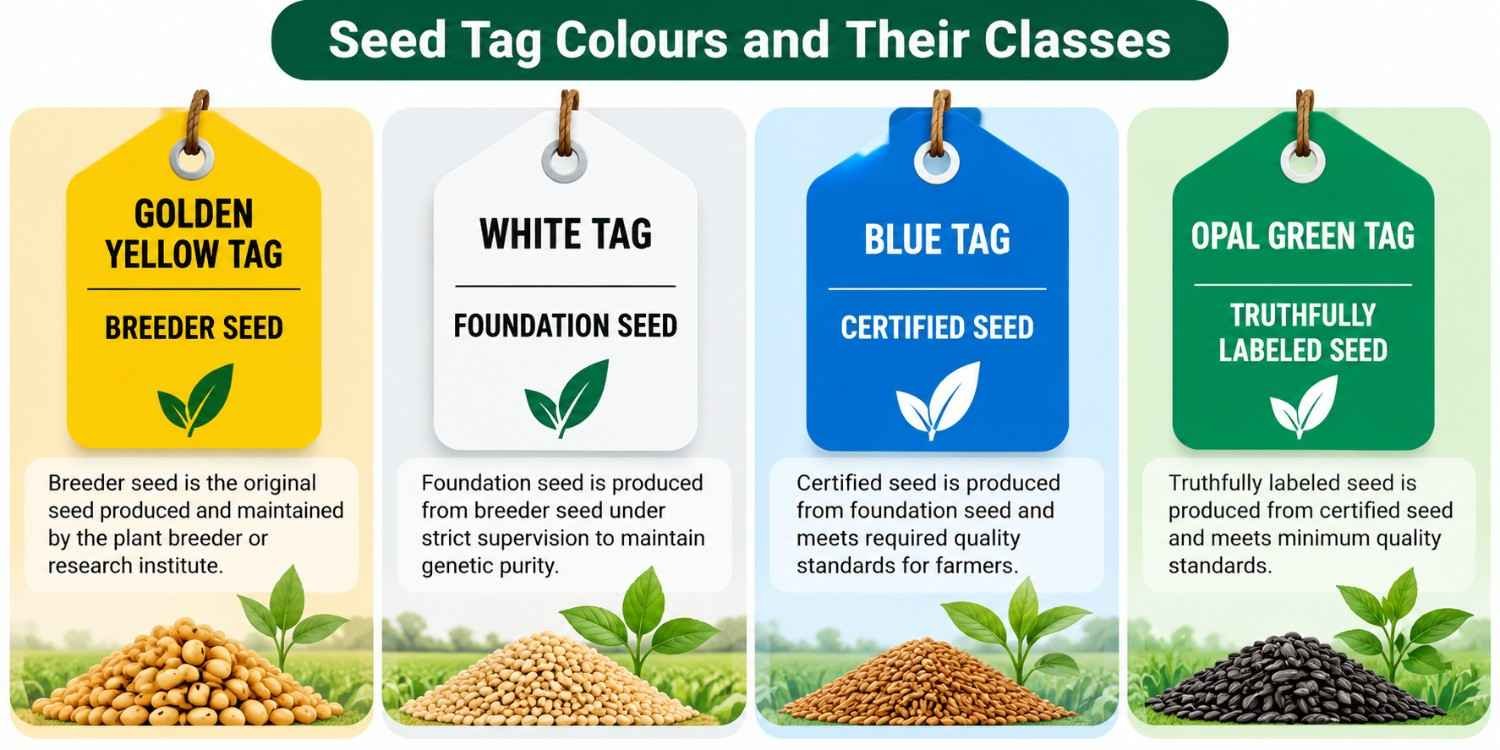
Seed moves through several generations before it reaches your field. Each class has a purpose and a tag colour. Knowing them helps you read labels correctly.
The Seed Generation Chain
- Breeder seed: Produced by the plant breeder or research institute. It carries a golden yellow tag.
- Foundation seed: Grown from breeder seed under close supervision. It carries a white tag.
- Certified seed: Grown from foundation seed for commercial farmers. It carries a blue tag.
Each step multiplies the seed while protecting its quality. Only the certified class is meant for regular farm sowing. Breeder and foundation seed feed the production chain.
What a Tag Should Show
A proper tag lists the crop, variety, and lot number. It shows germination percentage and purity. It also gives the date of test and the validity period.
Certified seed tags are usually valid for a limited period after testing. Seed can be retested and revalidated if stock remains. Never buy a bag with an expired tag.
Certified vs Truthful Seeds
Many buyers ask about certified vs truthful seeds. Both are legal and both are sold in India. The difference lies in who verifies the quality.
What Are Truthfully Labelled Seeds?
Truthfully labelled (TL) seeds are marketed on the producer's own declaration. The company tests the seed and prints the results on the label. No outside agency inspects the production field.
The producer is legally responsible for the label's accuracy. Government seed inspectors can still test samples from the market. Wrong labels can lead to penalties.
Key Differences at a Glance
|
Feature |
Certified Seeds |
Truthfully Labelled Seeds |
|
Field inspection |
By an official agency |
Not by an official agency |
|
Quality check |
Third-party lab testing |
Producer's own testing |
|
Tag colour |
Blue certification tag |
Opal green label |
|
Accountability |
Agency plus producer |
Producer only |
|
Buyer confidence |
Higher |
Depends on the brand |
Which One Should You Buy?
Certified seed is the safer pick when the crop is important. It works best for staple crops like paddy, wheat, and pulses. Independent checks give you extra protection.
Truthful seed from a trusted, long-standing brand can also perform well. Many vegetable and hybrid seeds are sold this way. If you choose it, research the company first.
Quality Seeds for Your Garden
Gardeners often feel certification is only for big farms. That is not true. Quality seeds for your garden matter just as much on a balcony or terrace.
Poor seed wastes your time, soil, and compost. It also kills the joy of growing your own food. Good seed gives you a strong start.
Tips for Home Gardeners
- Pick varieties suited to your local season and climate.
- Buy small packets from sealed, labelled stock.
- Check the packing date and expiry on the packet.
- Avoid seeds that look shrivelled, cracked, or mouldy.
- Sow a few extra seeds to allow for natural loss.
Simple Home Germination Test
You can test seed at home before sowing a full bed. It takes only a few days.
- Place ten seeds on a damp paper towel.
- Fold the towel and keep it in a warm spot.
- Check daily and keep the towel moist.
- Count sprouted seeds after the expected germination period.
- Eight or more sprouts out of ten means good seed.
This quick check saves money on large sowings. It also helps you judge old, stored seed.
Hybrid vs Open-Pollinated Seeds
Hybrid seeds give strong, uniform plants but should not be saved for replanting. Open-pollinated varieties can be saved and reused. Both types can be certified.
Choose based on your goal. Hybrids suit high yield, while open-pollinated seeds suit seed saving.
How to Check Certified Seeds Before Buying
A good buyer inspects before paying. Fake and repacked bags do exist in the market. A few simple checks protect you.
Buyer's Checklist
- Tag and seal: The tag should be intact and the bag stitched properly.
- Lot number: The number should match on the tag and the bill.
- Test date: Make sure the validity has not expired.
- Variety name: Confirm it matches what you asked for.
- Company details: A real address and contact number should be printed.
- Purchase bill: Always take a proper pucca bill with the lot number.
Keep Proof in Case of Failure
Save a small sample and the empty bag or tag after sowing. Keep the bill safe too. If germination fails, these items support your complaint.
Report serious problems to the local agriculture officer. Seed inspectors can test the lot. Farmers also use the Consumer Forum when needed.
Use Official Portals
The government runs SeedNet, an online system for seed information and tracking. You can explore it through the SeedNet India portal. It helps you understand approved varieties and seed movement.
Where to Buy Certified Seeds
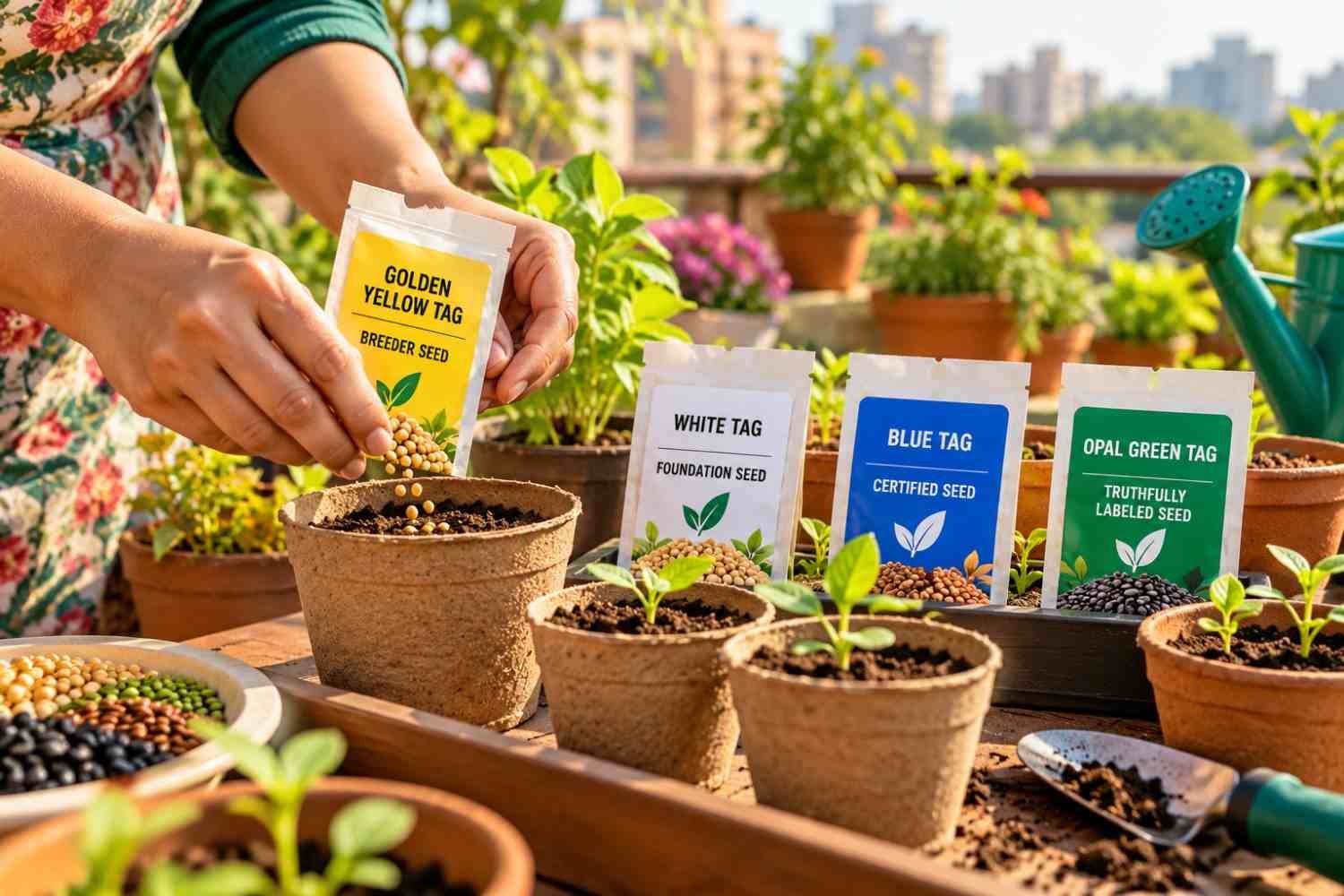
Knowing where to buy certified seeds is as important as knowing what to buy. The best product loses value if stored badly or sold fake. Stick to trusted channels.
Reliable Places to Buy
- State seed corporations: Government-run and closely regulated.
- Licensed seed dealers: Look for a valid seed licence on display.
- Authorised company outlets: Directly linked to the brand.
- Agricultural universities and KVKs: Good for local, tested varieties.
- Trusted online stores: Choose only sellers who show lot and tag details.
Places to Avoid
Avoid roadside sellers and unmarked loose stock. Avoid deals that seem far below the market price. Steer clear of any seller who refuses to give a bill.
If a price looks too good, the quality is usually poor. Cheap seed often costs more in the end.
Buy at the Right Time
Buy seed close to the sowing season. Fresh stock has better germination. Old stock stored in heat loses strength fast.
Plan your requirement early. Popular varieties sell out quickly during peak season.
How to Pick a Certified Seeds Company in India
Choosing a reliable certified seeds company India farmers can trust takes some homework. Not every seller is equal. The company's track record tells you a lot.
What a Good Company Offers
- Valid licences and registration under the Seeds Act
- Clear labels with lot numbers and test data
- Varieties matched to local soil and climate
- Agronomy advice from trained field staff
- Easy contact for complaints and support
- A record of steady, honest supply
Why Support and Advice Matter
Seed is only the first step of a good crop. Right sowing time, spacing, and nutrition decide the final result. A good company guides you through these stages.
Agri Raise Crop Care Pvt. Ltd. focuses on farmers' real field needs. Its team offers seed, crop nutrition, and protection advice in one place. You can browse the Agri Raise product range to see what suits your crop.
Questions to Ask Any Seller
- Is this lot certified, and which agency issued the tag?
- What are the germination and purity results?
- Is this variety suited to my area and season?
- Will you provide a bill with the lot number?
- Whom do I contact if germination is poor?
A confident seller answers these easily. Hesitation is a warning sign.
Common Buying Mistakes to Avoid
Even careful buyers slip up. These mistakes are easy to avoid once you know them. Keep this list handy before every season.
- Buying on price alone: The cheapest bag often hides poor germination.
- Ignoring the expiry date: Old seed gives weak, patchy stands.
- Skipping the bill: No bill means no proof and no complaint.
- Choosing the wrong variety: A variety must fit your soil, water, and season.
- Trusting verbal promises: Always rely on printed tag data.
- Storing seed badly: Damp or hot storage ruins even certified seed.
A Quick Example
A vegetable grower once bought tomato seed from a market stall. The packet had no tag and no date. Half the seedlings were weak, and some plants gave odd fruit.
He replaced the seed the next season with a labelled, tested lot. Germination improved and the crop became uniform. The lesson was simple: verify first, buy second.
Storage and Sowing Tips
Certified seed still needs good handling. Heat and moisture are its biggest enemies. Care after purchase protects your investment.
Storage Tips
- Keep bags in a cool, dry, well-ventilated room.
- Place bags on wooden pallets, away from walls and floor.
- Protect seed from rats, insects, and direct sunlight.
- Keep chemicals and fertilisers in a separate space.
- Reseal opened packets tightly after use.
Sowing Tips for Better Results
- Follow the recommended seed rate for your crop.
- Treat seed with a suitable fungicide if advised.
- Sow at the right depth and spacing.
- Ensure proper soil moisture at the time of sowing.
- Sow at the recommended time for your region.
Seed Treatment Matters
Seed treatment protects young seedlings from soil-borne diseases. It also guards against early pests. Use only recommended products and follow the label dose.
Ask your local agriculture officer if you are unsure. Correct treatment adds real value to certified seed.
FAQs
1. What are certified seeds?
Certified seeds are seeds grown and tested under official supervision. An approved agency checks genetic purity, germination, and quality. Only passed lots receive a certification tag.
2. Why choose certified seeds over ordinary seeds?
Certified seeds give better germination, true variety, and a more uniform crop. They carry lower risk of disease and weed seed. You also get legal protection if quality fails.
3. What is the difference between certified vs truthful seeds?
Certified seeds are inspected and tested by an official agency. Truthfully labelled seeds rely on the producer's own quality declaration. Both are legal, but certified seeds offer stronger third-party assurance.
4. What are the requirements for seed certification?
Seed must come from approved source seed and pass field inspections. It must also meet limits for purity, germination, and moisture. Proper records and lot tracing are required as well.
5. Where to buy certified seeds safely?
Buy from trusted sources such as state seed corporations, licensed dealers, agricultural universities, or reputed brands like Agriraise (Agri Raise Crop Care Pvt. Ltd.). Always verify the seed tag, lot number, and expiry date, and take a proper bill with every purchase.
6. How can I identify a genuine certified seed bag?
Look for an intact tag, official seal, and clear lot number. The tag should show test date and germination data. Match these details with your purchase bill.
Conclusion
Certified seeds give your crop the strongest possible start. Their value comes from real field checks and lab testing, not from marketing. A single tag can save a whole season's effort.
Remember the basics: check the tag, verify the lot, keep the bill, and buy from trusted sellers. Store the seed well and sow at the right time. These habits protect both your money and your harvest.
Ready to grow with confidence? Explore Agri Raise Crop Care Pvt. Ltd. for dependable crop care support and expert guidance. Start your next season with quality you can trust.

Leave a comment


Comments(0)