
Blog
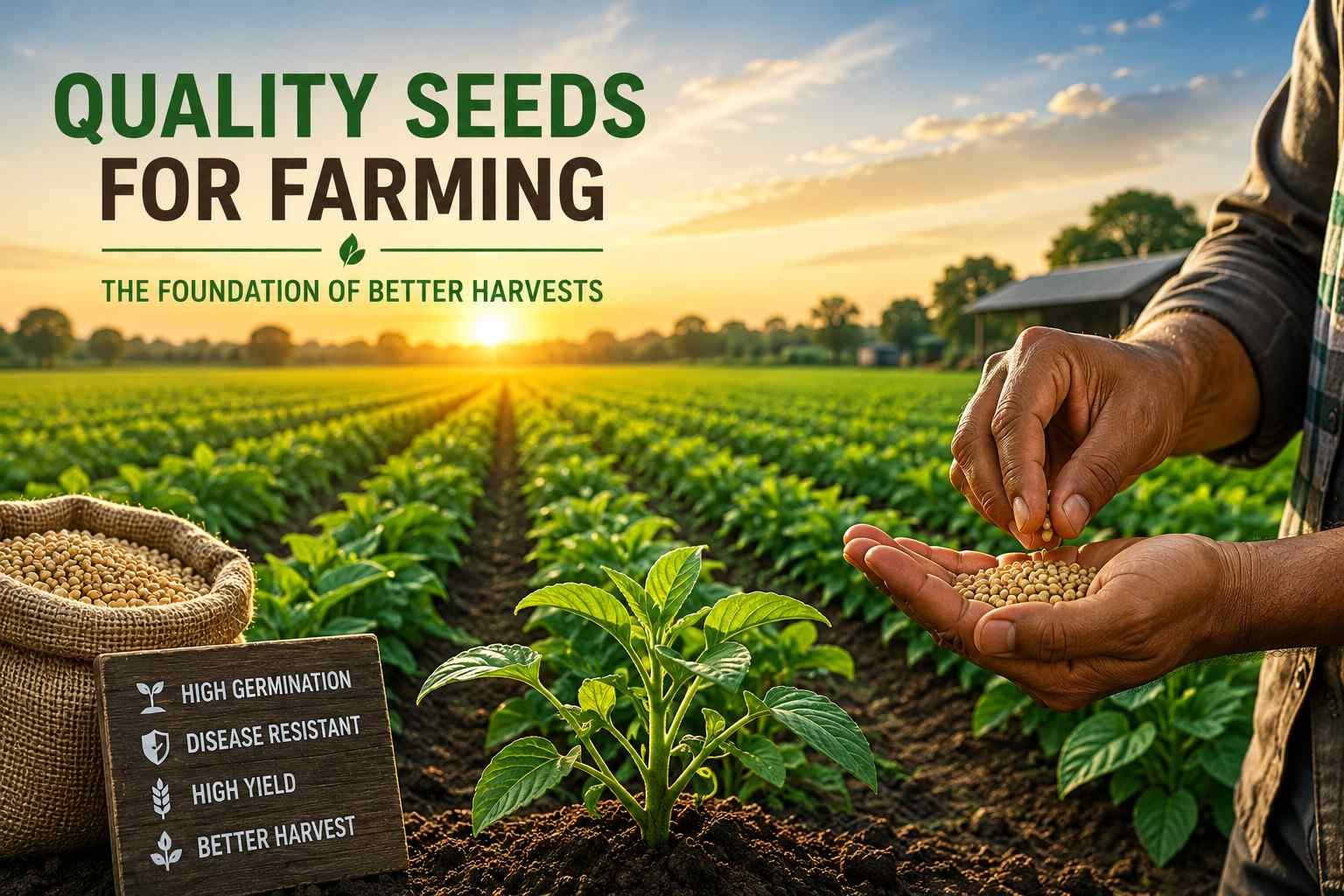
Quality Seeds for Farming: The Foundation of Better Harvests
Introduction to Seed Quality
Agriculture begins with a simple yet powerful element: the seed. Successful harvests and productive farms start with selecting the right seeds. Farmers invest in irrigation and resources, but poor seeds undermine their efforts. Quality seeds are the foundation of better harvests.
Seed quality directly influences crop establishment, plant health, productivity, and profitability. Choosing superior seeds is an investment in agricultural success..
What Are Quality Seeds?
Quality seeds have high genetic purity, strong germination, and are clean and disease-free. These seeds are produced, tested, and stored to maintain performance.
Key Characteristics of Quality Seeds
Several factors determine seed quality:
- High germination rate
- Genetic purity
- Physical purity
- Seed vigor
- Disease resistance
- Uniform size and appearance
Seeds possessing these characteristics provide a strong foundation for healthy crop development.
Importance of Seed Purity
Seed purity guarantees farmers get the exact crop variety they want. Genetic contamination can lead to inconsistent crop performance and lower yields. High-purity seeds help maintain crop uniformity and maximize productivity.
Why Seed Quality Matters in Agriculture
The quality of seeds determines the overall success of crop production. Using quality seeds for farming can help maximize yield potential, while poor-quality seeds can significantly limit productivity even under ideal growing conditions.
Impact on Germination
Germination is the first step in crop establishment. High-quality seeds exhibit superior germination rates, leading to uniform plant emergence. Uniform emergence aids consistent crop growth, simplifying irrigation, fertilization, and pest control. Uniform emergence supports consistent crop growth and simplifies irrigation, fertilization, and pest control.
Influence on Crop Growth
Healthy seeds produce vigorous seedlings capable of developing strong root systems. Strong roots improve nutrient uptake, water absorption, and resistance to environmental stress. As a result, plants become more resilient and productive throughout the growing season.
Benefits of Quality Seeds for Farming
The advantages of using quality seeds extend beyond germination. They influence nearly every aspect of agricultural production.
Higher Crop Yields
One of the most significant benefits of quality seeds is increased yield potential. Improved seed varieties are specifically developed to maximize productivity under diverse growing conditions.
High-quality seeds contribute to:
- Better plant establishment
- Enhanced nutrient utilization
- Increased biomass production
- Improved grain or fruit development
These factors collectively result in higher harvest volumes and better economic returns.
Better Resistance to Diseases
Diseases can devastate crops and significantly reduce farm income. Modern quality seed varieties often include genetic resistance to common pathogens. This resistance reduces crop losses and decreases dependence on chemical treatments.
Healthier crops translate into greater productivity and sustainability.
Improved Resource Efficiency
Agricultural resources such as water, fertilizers, and labor represent substantial costs for farmers. Quality seeds help optimize the utilization of these resources.
Superior seeds need less intervention and respond better to management. Consequently, farmers achieve greater output from the same level of resource investment.
Economic Benefits for Farmers
Agricultural profitability depends heavily on production efficiency and crop performance.
Increased Profitability
Quality seeds boost farming revenues through higher yields and better crop quality. Better-quality produce frequently commands premium market prices, further enhancing profitability.
Farmers who invest in superior seeds generally experience stronger financial returns over time.
Reduced Production Costs
Quality seeds may cost more upfront but lower overall production costs.
Benefits include:
- Lower replanting costs
- Reduced pesticide use
- Improved input efficiency
- Fewer crop failures
These savings contribute significantly to long-term farm profitability.
How to Identify Quality Seeds
Selecting quality seeds requires careful evaluation.
Physical Characteristics
Farmers should examine seeds for:
- Uniform size
- Consistent color
- Freedom from cracks
- Absence of insect damage
- Clean appearance
Healthy seeds generally feel firm and possess a natural shine.
Certification and Testing
Certified seeds undergo rigorous quality testing. Certification labels provide assurance regarding:
- Germination percentage
- Genetic purity
- Moisture content
- Seed health standards
Buying certified seeds from trusted suppliers ensures quality.
The Role of Seed Technology
Advances in agricultural science have transformed seed development.
Hybrid Seeds
Hybrid seeds combine desirable traits from different parent lines. These seeds often offer:
- Higher yields
- Improved disease resistance
- Better adaptability
- Enhanced crop uniformity
Hybrid technology has played a major role in increasing agricultural productivity worldwide.
Improved Seed Varieties
Plant breeding programs develop improved seed varieties for emerging agricultural challenges.
These innovations help farmers cope with:
- Climate variability
- Pest pressures
- Soil limitations
- Water scarcity
Sustainable Farming Through Quality Seeds
Sustainability is becoming increasingly important in modern agriculture.
Environmental Benefits
Quality seeds promote eco-friendly farming by lowering chemical use. Disease-resistant varieties help minimize pesticide usage, reducing environmental impact.
Long-Term Agricultural Productivity
Healthy soils and productive farms depend on efficient resource use. Quality seeds enhance crop performance and reduce losses, supporting agricultural sustainability.
Common Mistakes When Selecting Seeds
Many farmers unintentionally compromise productivity through poor seed selection practices.
Common mistakes include:
- Purchasing uncertified seeds
- Ignoring germination rates
- Choosing varieties unsuitable for local conditions
- Failing to inspect seed quality
- Storing seeds improperly
Avoiding these mistakes can significantly improve farm outcomes.
Best Practices for Seed Storage
Even high-quality seeds can lose viability if stored incorrectly.
Recommended storage practices include:
- Keeping seeds dry
- Maintaining cool temperatures
- Using airtight containers
- Protecting seeds from pests
- Monitoring moisture levels regularly
Proper storage helps preserve seed quality until planting time.
Future Trends in Seed Development
Agricultural innovation continues to drive seed improvement.
Emerging trends include:
- Climate-resilient varieties
- Precision breeding technologies
- Enhanced nutrient-use efficiency
- Improved drought tolerance
- Sustainable seed production systems
These developments will play a critical role in meeting future food security challenges.
Conclusion
The journey from seed to harvest starts with choosing the right seeds. Quality seeds are foundational for productivity, profitability, and sustainability in farming. Quality seeds enhance germination, crop health, disease resistance, and yields. Quality seeds help farmers achieve better harvests and long-term farming success.
FAQs
1. Why are quality seeds important in farming?
Quality seeds improve germination, crop health, productivity, and profitability while reducing production risks.
2. What is the difference between certified seeds and ordinary seeds?
Certified seeds undergo testing and verification for genetic purity, germination rate, and health standards, ensuring superior quality.
3. How do quality seeds increase crop yield?
They produce vigorous plants with better growth characteristics, resulting in improved productivity and harvest quality.
4. How should seeds be stored before planting?
Seeds should be stored in cool, dry conditions with controlled humidity and protection from pests and contaminants.
5. Can quality seeds help with climate change adaptation?
Yes. Many modern seed varieties are developed to withstand drought, heat, diseases, and other environmental stresses associated with climate change.

Leave a comment


Comments(0)