
Blog
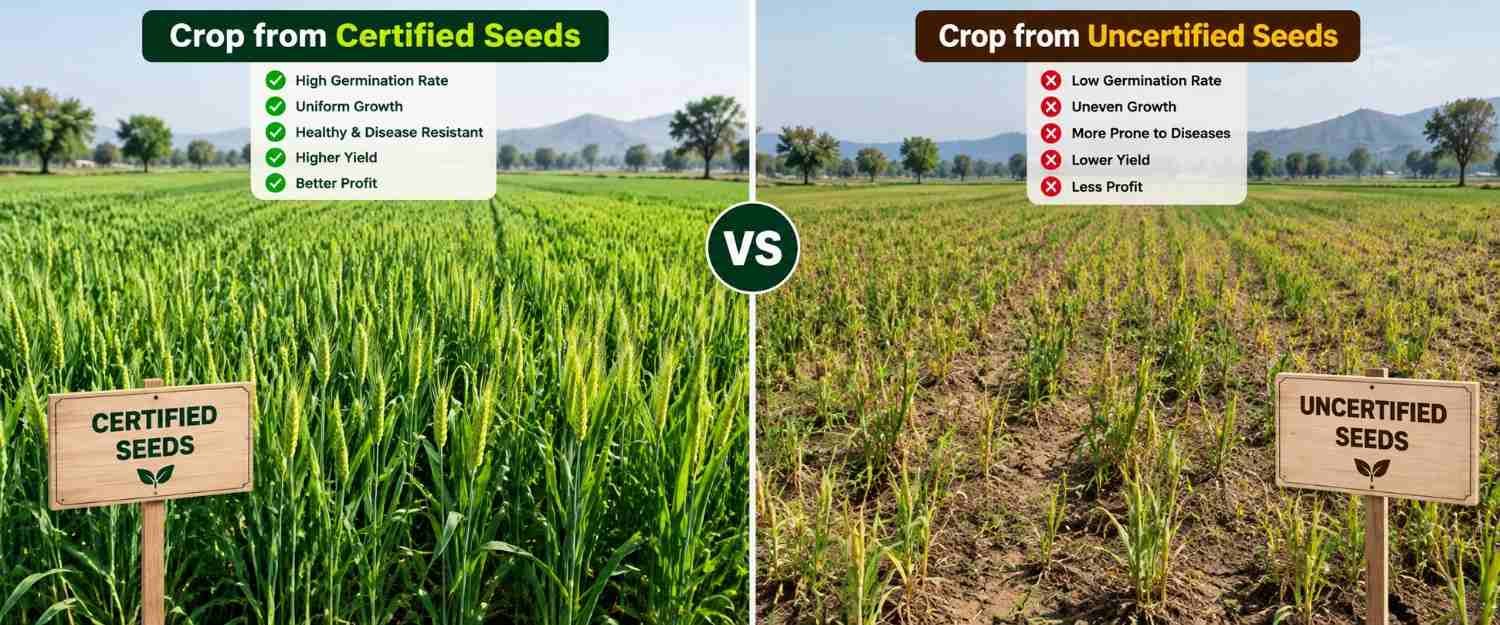
Benefits of Using Certified Seeds for Higher Crop Yield
Introduction
In today’s farming, the quality of seeds is very important because it directly affects crop production and farmers’ profits. Using certified seeds is one of the best ways to increase yield and understand the real benefits of modern farming. Farmers often face the challenge of choosing between certified and uncertified seeds. While uncertified seeds may look cheaper, they can lead to poor germination, low yield, and a higher risk of pests and diseases. On the other hand, certified seeds are carefully tested, high in quality, and approved by agricultural authorities.
Using certified seeds is one of the most effective ways to achieve higher crop yield and better farm income.
What Are Certified Seeds?
Certified seeds are produced under strict quality standards and approved by the government or authorized agencies. To understand how these seeds are tested and approved, read our detailed guide on seed certification process for Indian farmers.
- Genetic purity
- Physical purity
- Germination rate
- Moisture content
- Disease resistance
They are usually sold with a certification tag or label, ensuring farmers receive authentic and high-quality seeds.
Why Certified Seeds Matter for Farmers
Using certified seeds is not only for planting, but also helps farmers grow more crops, face fewer problems, and keep the soil healthy for the future. Poor-quality seeds can result in uneven crop growth, higher input costs, and lower returns.
Key Benefits of Certified Seeds
1. Higher Germination Rate
Certified seeds are tested to make sure most of them grow into healthy plants. This leads to:
- Uniform crop growth
- Better plant population per acre
- Efficient use of land
Result: Higher yield with less seed wastage
2. Improved Crop Yield
One of the biggest advantages is increased productivity. Certified seeds are developed using advanced breeding techniques to maximize output.
- Higher grain production
- Better crop uniformity
- Consistent performance across seasons
Result: More profit per acre
3. Disease and Pest Resistance
Certified seeds are often treated and selected for resistance against common pests and diseases.
- Reduced crop loss
- Lower dependency on pesticides
- Healthier crops
Result: Cost savings + eco-friendly farming
4. Genetic Purity and Quality Assurance
Certified seeds maintain their original variety characteristics.
- True-to-type plants
- Better quality produce
- Higher market value
Result: Better selling price in the market
5. Better Adaptability to Local Conditions
Certified seeds are developed for specific climatic and soil conditions.
- Suitable for local environments
- Better tolerance to drought or stress
- Stable performance
Result: Reliable harvest even in challenging conditions
6. Reduced Risk of Crop Failure
Using uncertified seeds increases the risk of crop failure due to poor quality or contamination.
Certified seeds ensure:
- Reliable growth
- Predictable results
- Lower farming risk
Result: Peace of mind for farmers
7. Higher Return on Investment (ROI)
Although certified seeds may cost slightly more, they provide better returns due to:
- Higher yield
- Lower input costs (fertilizer, pesticides)
- Better crop quality
Result: More income compared to traditional seeds
Certified Seeds vs Uncertified Seeds
| Feature | Certified Seeds | Uncertified Seeds |
|---|---|---|
| Germination Rate | High | Low/Uncertain |
| Purity | Guaranteed | Not assured |
| Yield | High | Low |
| Disease Resistance | Strong | Weak |
| Cost | Slightly higher | Cheaper |
| Profitability | High | Low |
Conclusion: Certified seeds are a smart long-term investment
How to Identify Certified Seeds
Farmers should always check for:
- Certification tag (blue/white label)
- Proper packaging
- Lot number and validity
- Government approval mark
Avoid buying loose or unlabelled seeds from unreliable sources.
Tips for Using Certified Seeds Effectively
- Buy from trusted suppliers or authorized dealers
- Store seeds in a cool, dry place
- Follow recommended sowing methods
- Use proper fertilizer and irrigation practices
- Monitor crops regularly
Conclusion
Certified seeds are the foundation of successful farming. They improve crop growth, increase yield, and ensure better income for farmers. In today’s competitive agriculture, using certified seeds is essential for sustainable and profitable farming.
Choose high-quality certified seeds from a trusted agricultural company to ensure better yield and long-term farming success.

Leave a comment


Comments(0)