
Blog
Berseem Seed Rate Per Acre in India: Complete Sowing Guide
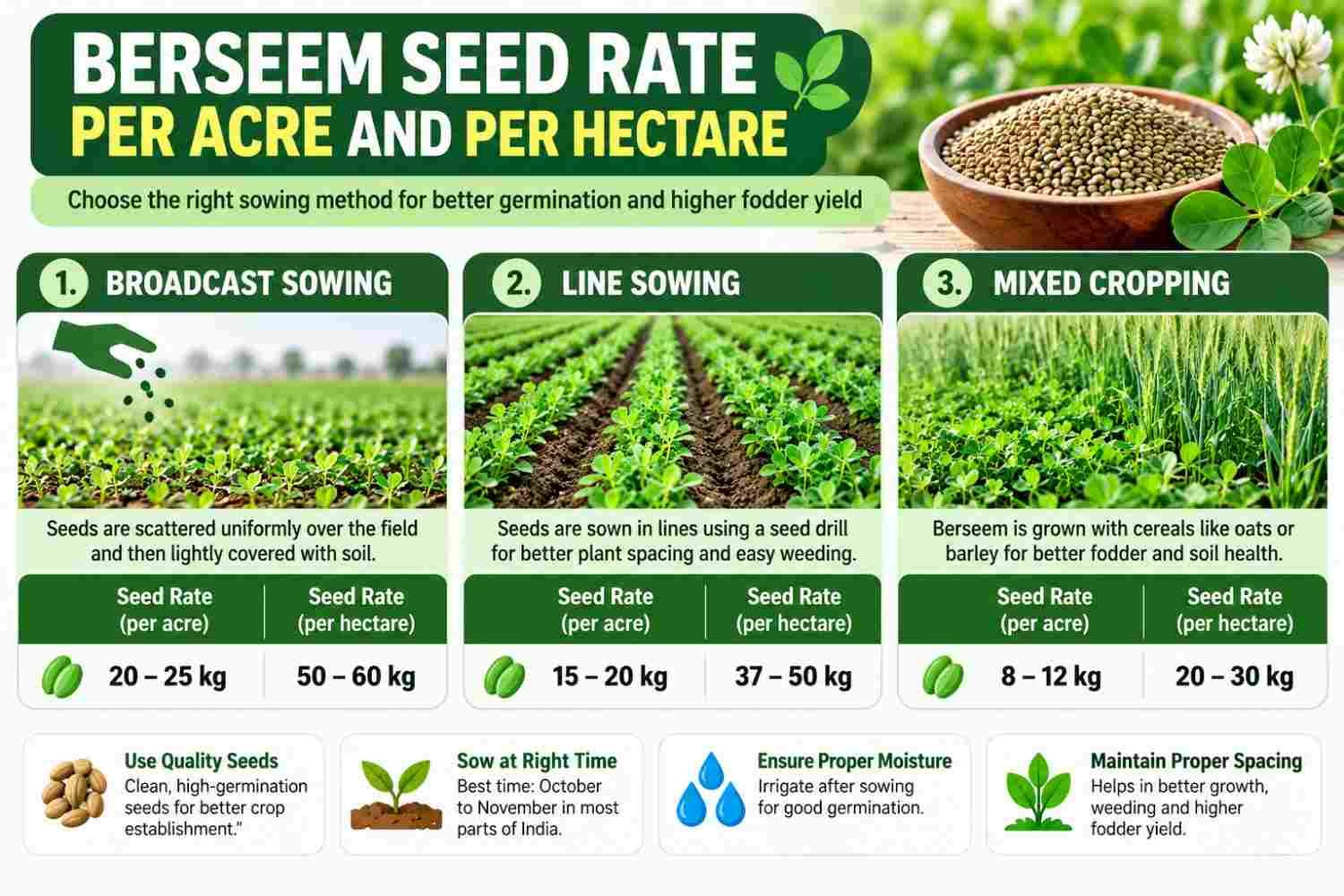
The berseem seed rate is 10 to 12 kg per acre, or 25 to 30 kg per hectare, for pure sowing in India. Use the higher rate for late sowing or the broadcast method. Mixed sowing with mustard or oats needs less berseem seed, about 6 to 8 kg per acre.
Introduction
Berseem seed rate decides how thick your fodder crop stands and how many cuts you get. Too little seed leaves gaps and weeds. Too much seed wastes money and causes weak, crowded plants.
Many dairy farmers lose green fodder every winter because of a wrong seed rate. A small mistake at sowing can cut your milk-feed supply for months. The good news is that it is easy to fix.
In this guide, you will learn the right berseem seed rate per acre and per hectare. You will also learn sowing time, seed treatment, spacing, and common mistakes. Everything here is practical and based on standard Indian agronomy.
Table of Contents
- What Is Berseem and Why Does Seed Rate Matter?
- Berseem Seed Rate Per Acre and Per Hectare
- Seed Rate of Berseem by Sowing Method
- Best Sowing Time in India
- Soil and Land Preparation
- Seed Treatment Before Sowing
- Step-by-Step Sowing Guide
- Berseem Fodder Seed Rate for Mixed Cropping
- Fertilizer, Irrigation and Cutting Schedule
- Common Mistakes to Avoid
- Choosing Quality Berseem Seeds
- FAQs
What Is Berseem and Why Does Seed Rate Matter?
Berseem is a winter legume fodder, also called Egyptian clover. Its botanical name is Trifolium alexandrinum. It is among the most popular green fodder crops in northern and central India.
Farmers love it because it gives several cuts in one season. The fodder is soft, tasty, and rich in protein. Cattle, buffaloes, sheep, and goats eat it happily.
Why the right berseem seed rate matters
Seed rate controls plant population per square metre. A correct berseem seed rate gives even stands and better weed control. It also supports regrowth after each cut.
- Too low: Gaps appear and weeds take over the field.
- Too high: Plants compete for light, water, and nutrients.
- Just right: You get dense stands, good regrowth, and higher fodder yield.
Berseem Seed Rate Per Acre and Per Hectare
The standard berseem seed rate per acre is 10 to 12 kg for pure sowing. This equals about 25 to 30 kg per hectare. One hectare is roughly 2.47 acres.
Here is a quick reference table for easy planning.
|
Condition |
Seed Rate Per Acre |
Seed Rate Per Hectare |
|
Normal timely sowing (pure crop) |
10 kg |
25 kg |
|
Late sowing or poor seedbed |
12 kg |
30 kg |
|
Broadcast in standing water |
10–12 kg |
25–30 kg |
|
Line sowing (20–25 cm rows) |
8–10 kg |
20–25 kg |
|
Mixed with mustard or oats |
6–8 kg |
15–20 kg |
Berseem seed per acre: quick calculation
Here is a simple way to plan your purchase. Multiply your land area in acres by 10 to 12 kg. Always buy a little extra for gap filling.
- 1 acre: 10–12 kg
- 2 acres: 20–24 kg
- 5 acres: 50–60 kg
Berseem clover seeding rate for other regions
International guides quote a berseem clover seeding rate of 15 to 25 kg per hectare. Those figures suit cooler climates and drilled sowing. Indian conditions usually need a higher rate because of heat, uneven beds, and broadcast sowing.
Tip: Check the germination percentage on the seed packet. If it is below 80%, increase the seed rate by about 10%.
Seed Rate of Berseem by Sowing Method
The seed rate of berseem per acre changes with your sowing method. Each method has its own benefits. Pick the one that matches your field and labour.
Broadcast method
Most Indian farmers broadcast berseem seed by hand. The field is flooded with 5 to 7 cm of water first. Seeds are scattered into the standing water.
This method needs 10 to 12 kg per acre. It is fast and cheap. Seeds settle in the soft mud and sprout in about 3 to 5 days.
Line sowing method
Line sowing uses a seed drill or a furrow opener. Rows are kept 20 to 25 cm apart. Seed depth stays around 1 to 2 cm.
This method needs 8 to 10 kg per acre. It saves seed and makes weeding easier. It also gives more uniform growth.
Which method is better?
- Broadcast: Best for small farms and quick sowing.
- Line sowing: Best for seed saving and cleaner fields.
Best Sowing Time in India
Berseem is a cool-season crop. It grows best at 15 to 25°C. Very hot weather at sowing lowers germination.
In north India, sow from mid-October to mid-November. Central India follows a similar window. In southern regions, sowing from September to October often works well.
Why timely sowing protects your seed rate
Late sowing means slower early growth and fewer cuts. If you must sow late, raise the seed rate to 12 kg per acre. Late-sown fields also need closer watering.
Soil and Land Preparation
Berseem grows well in loamy and clay-loam soils. A soil pH of 6.5 to 7.5 is ideal. Avoid waterlogged and highly saline fields.
A fine, level seedbed helps small seeds sprout evenly. Here is a simple land preparation routine.
- Plough the field once or twice with a harrow or cultivator.
- Level the land properly using a leveller.
- Add well-rotted farmyard manure at about 4 tonnes per acre.
- Make small, flat beds for easy flooding.
Good leveling is critical. Uneven fields cause patchy germination, even when your seed rate is correct.
Seed Treatment Before Sowing

Seed treatment protects your investment. It also improves nitrogen fixation. Do it just before sowing.
Use Rhizobium culture
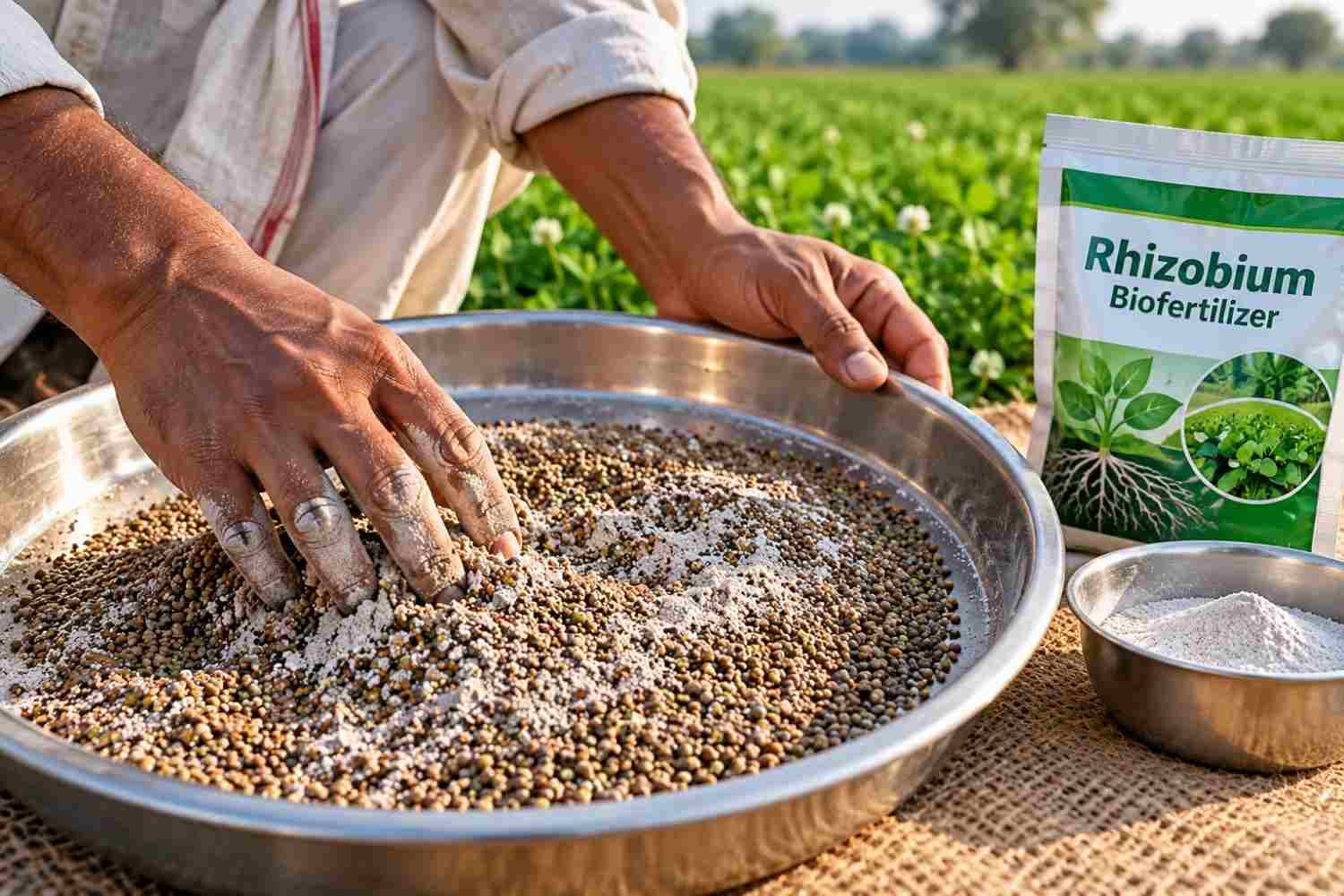
Berseem is a legume. It fixes nitrogen with the help of Rhizobium bacteria. Mix one 200 g packet of Rhizobium culture with 10 kg seed.
Use a little jaggery solution as a sticker. Dry the seed in shade for 20 to 30 minutes. Sow it the same day.
Remove weed seeds
Berseem seed can carry weed seeds, especially cuscuta (dodder). Cuscuta is a parasitic weed that can ruin a field. Always buy clean, purity-tested seeds.
- Soak the seed briefly in clean water and skim off floating weed seeds.
- Never reuse seed from a cuscuta-affected field.
- Buy from a trusted seed company with clear purity labels.
Step-by-Step Sowing Guide
Follow these steps for a strong stand. They suit both small and large farms.
Step 1: Prepare the field
Plough, level, and form beds. Apply basal manure and fertilizer. Keep the surface fine and moist.
Step 2: Calculate seed quantity
Use 10 to 12 kg per acre for pure sowing. Adjust for germination percentage and sowing date. Keep 5% extra for gap filling.
Step 3: Treat the seed
Apply Rhizobium culture and dry in shade. Remove any floating weed seeds before this step.
Step 4: Sow evenly
For broadcasting, flood the bed lightly first. Mix seed with fine sand for even spreading. Scatter in two directions, crossing your passes.
Step 5: Give the first irrigation
In line sowing, irrigate right after sowing. In the flooded method, drain extra water after a day. Avoid standing water for long.
Step 6: Monitor germination
Seedlings emerge within 4 to 7 days. Fill gaps within the first week if needed. Thin patches by re-sowing a little seed.
Berseem Fodder Seed Rate for Mixed Cropping
Berseem fodder seed rate drops when you mix it with another crop. Mixing improves balance in the ration. Oats and mustard are the two common partners.
Berseem with mustard
Use berseem at 6 to 8 kg per acre. Add mustard at about 0.5 to 1 kg per acre. Mustard gives an early green cut while berseem establishes.
Berseem with oats
Use berseem at about 6 to 8 kg per acre. Add oats at around 8 to 10 kg per acre. Oats add energy and berseem adds protein.
Why mixed cropping helps
- Better feed balance for milch animals.
- Mustard or oats reduces bloat risk from pure legume feeding.
- Early green cuts arrive sooner.
Fertilizer, Irrigation and Cutting Schedule
Correct seed rate works best with good crop care. Here are the basics.
Fertilizer
Berseem fixes its own nitrogen, so it needs only a small starter dose. Common advice is about 8 kg nitrogen and 24 to 32 kg phosphorus per acre at sowing. Test your soil for exact needs.
Irrigation
Give the first irrigation right after sowing. Then irrigate every 10 to 15 days in winter. Increase frequency as temperatures rise in spring.
Cutting schedule
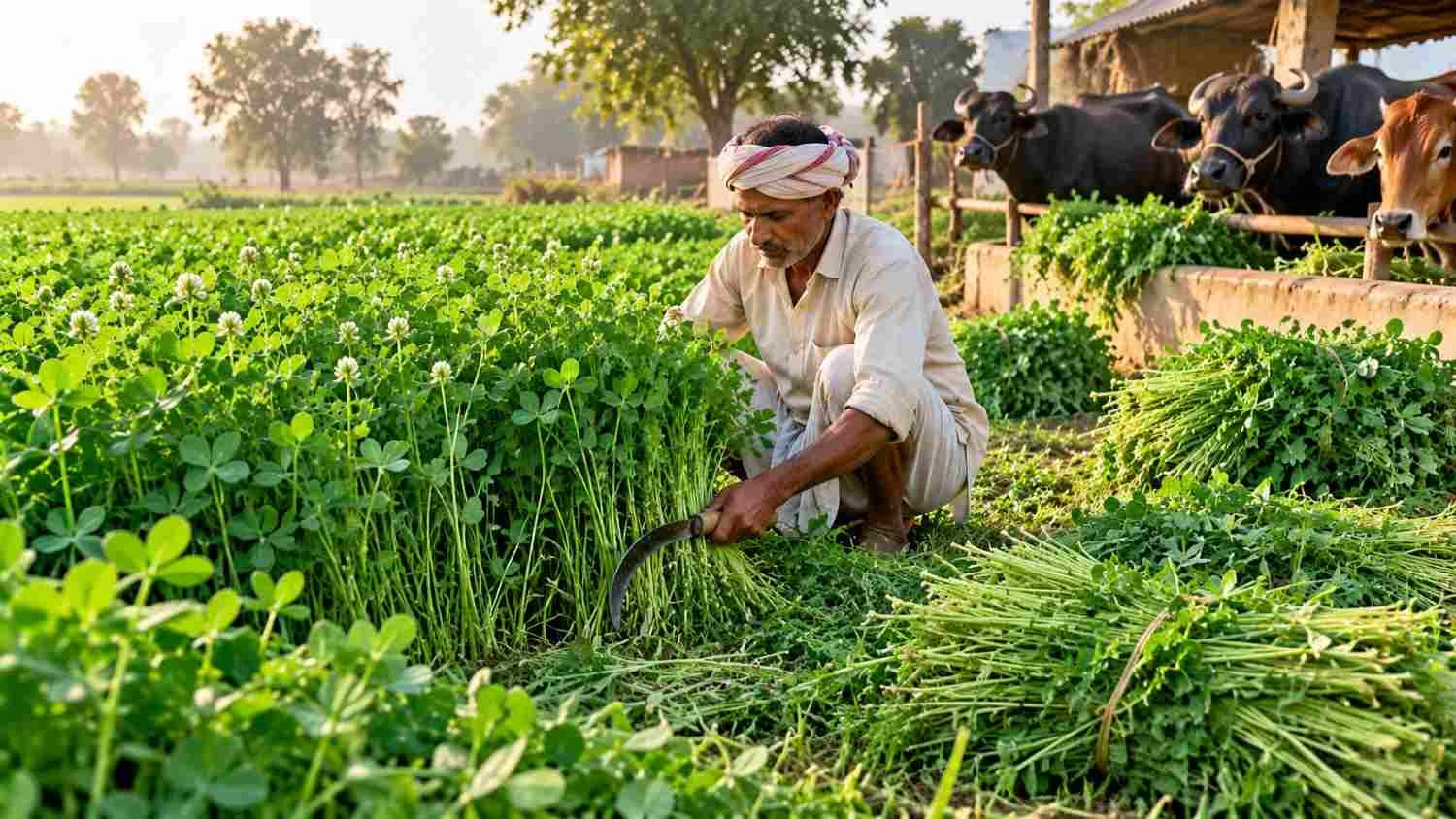
- First cut: About 45 to 55 days after sowing.
- Next cuts: Every 25 to 30 days.
- Cutting height: Leave 5 to 7 cm above ground for fast regrowth.
A well-managed crop can give four to six cuts. Total green fodder yield often reaches 280 to 400 quintals per acre. Actual results depend on variety, soil, and care.
Common Mistakes to Avoid
Many berseem failures come from a few simple errors. Avoid these and your crop will thrive.
- Using old, low-germination seed. Always check the packing date.
- Skipping Rhizobium treatment. It lowers nodulation and growth.
- Sowing too early in hot weather. Germination drops sharply.
- Leaving water standing. Seedlings rot in waterlogged beds.
- Cutting too low. Plants regrow slowly and yield falls.
- Buying unlabelled seed. It can carry cuscuta and other weeds.
Choosing Quality Berseem Seeds
Seed quality matters as much as seed rate. Poor seed with a perfect rate still gives a poor crop. Look for these signs before you buy.
- High germination percentage on the label.
- Physical purity with no weed or chaff.
- Clearly mentioned lot number and packing date.
- A reliable brand with a good field record.
Popular berseem varieties in India include Mescavi, Wardan, Bundel Berseem 2, Pusa Giant, and JB-1. Choose a variety recommended for your state. Ask your local agriculture department or Krishi Vigyan Kendra for advice.
If you are exploring other seed options, read our full guide on Barley Seeds for Farming in India: Complete Guide (2026). You can also browse the Agri Raise Crop Care berseem seeds page for available packs.
For official crop recommendations, refer to these trusted sources:
- Indian Council of Agricultural Research (ICAR)
- ICAR–Indian Grassland and Fodder Research Institute (IGFRI)
FAQs
What is the berseem seed rate per acre?
The standard berseem seed rate per acre is 10 to 12 kg for pure sowing. Use 10 kg for timely sowing. Use 12 kg for late sowing or rough seedbeds.
What is the berseem seed rate per hectare?
The berseem seed rate per hectare is 25 to 30 kg for pure sowing. Line sowing may need only 20 to 25 kg. Mixed cropping needs about 15 to 20 kg.
How much berseem seed per acre is needed for mixed sowing with mustard?
Use about 6 to 8 kg of berseem seed per acre with mustard or oats. Add 0.5 to 1 kg mustard or 8 to 10 kg oats. This gives a balanced green fodder.
What is the best time to sow berseem?
Sow berseem from mid-October to mid-November in north India. Cooler weather gives better germination. Late sowing needs a higher seed rate.
How many cuts can I get from berseem?
A well-managed berseem crop gives four to six cuts. The first cut comes at 45 to 55 days. Later cuts follow every 25 to 30 days.
Does berseem seed need treatment before sowing?
Yes, treat the seed with Rhizobium culture before sowing. Use one 200 g packet for 10 kg seed. It improves nitrogen fixation and plant growth.
Conclusion
The right berseem seed rate is the base of a healthy fodder crop. Stick to 10 to 12 kg per acre for pure sowing, and adjust for method, season, and seed quality. Treat the seed, sow on time, and cut at the right height.
With good seed and simple care, you can feed your animals green fodder all winter. Choose certified, purity-tested seed and plan your sowing early.
Ready to sow? Explore quality seeds from Agri Raise Crop Care Pvt. Ltd. and get your fodder season off to a strong start.

Leave a comment


Comments(0)